
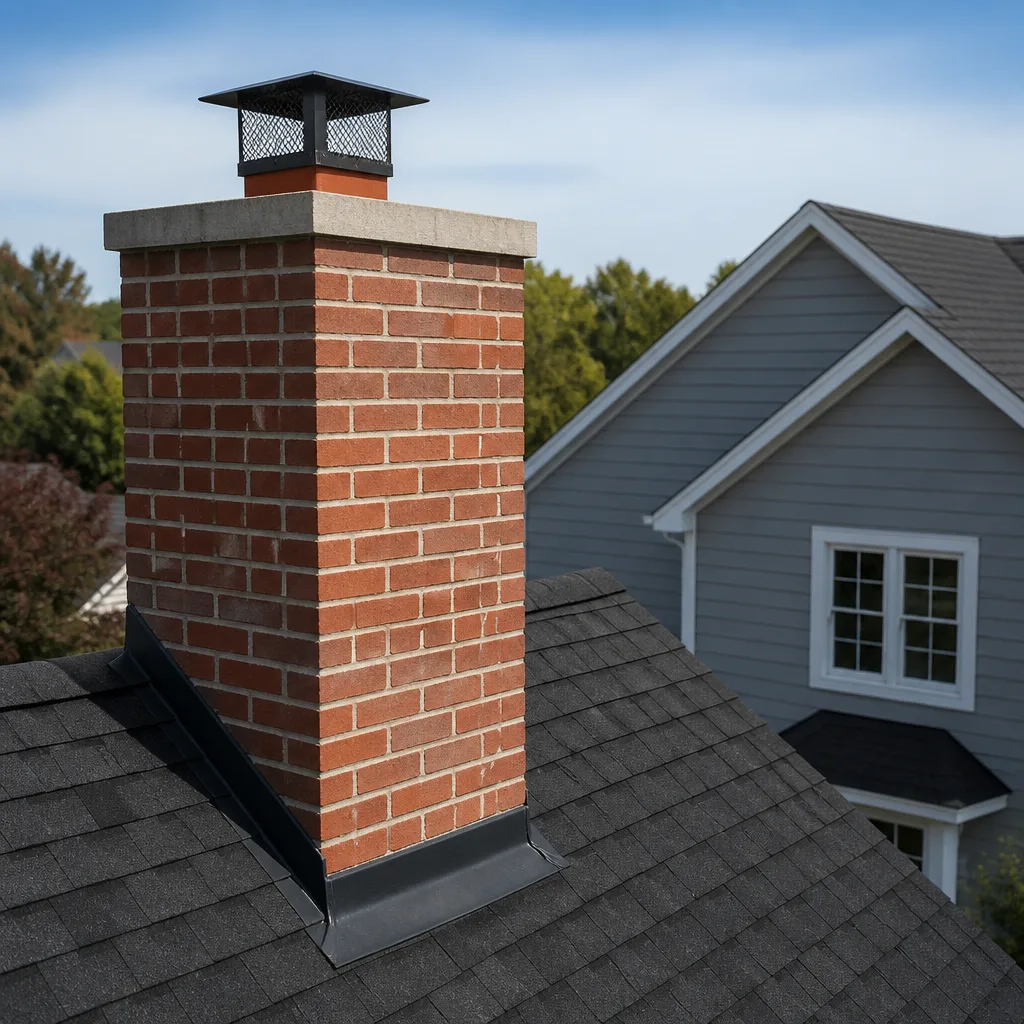
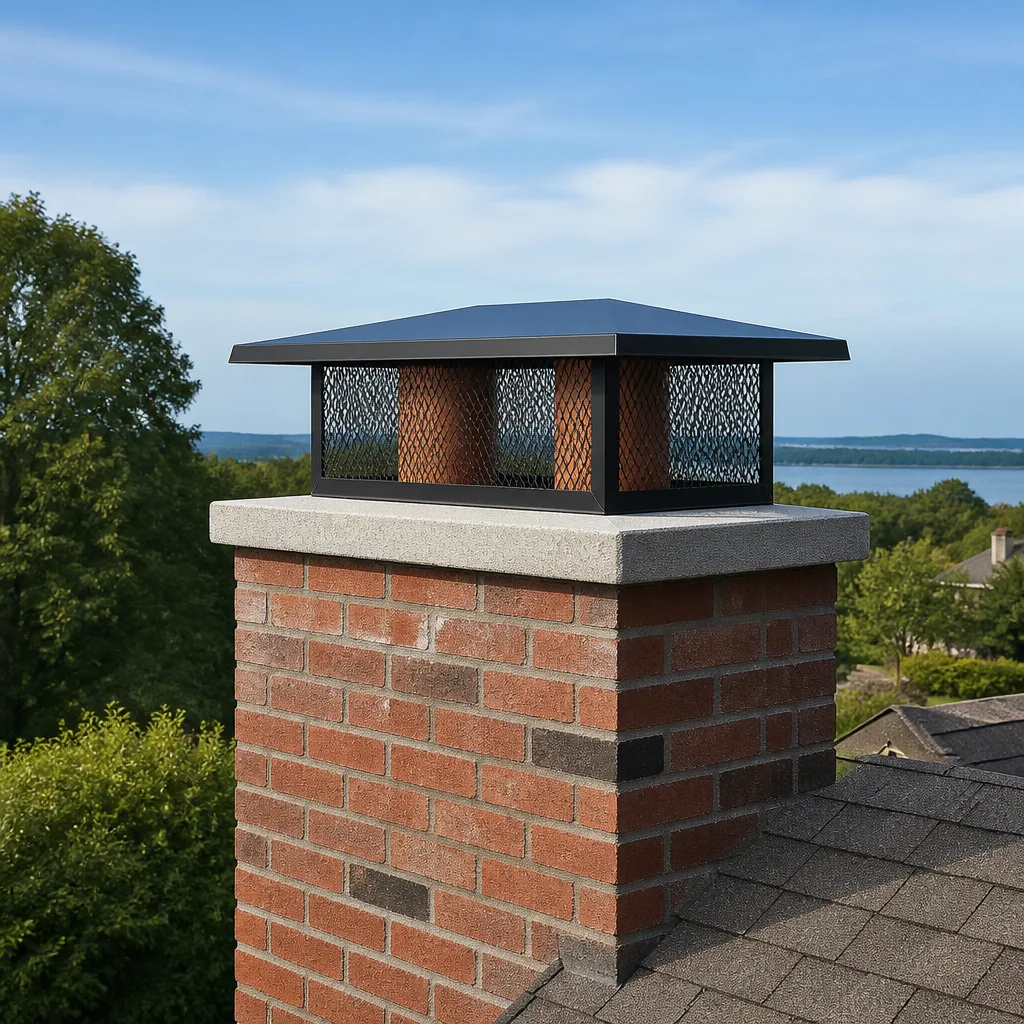
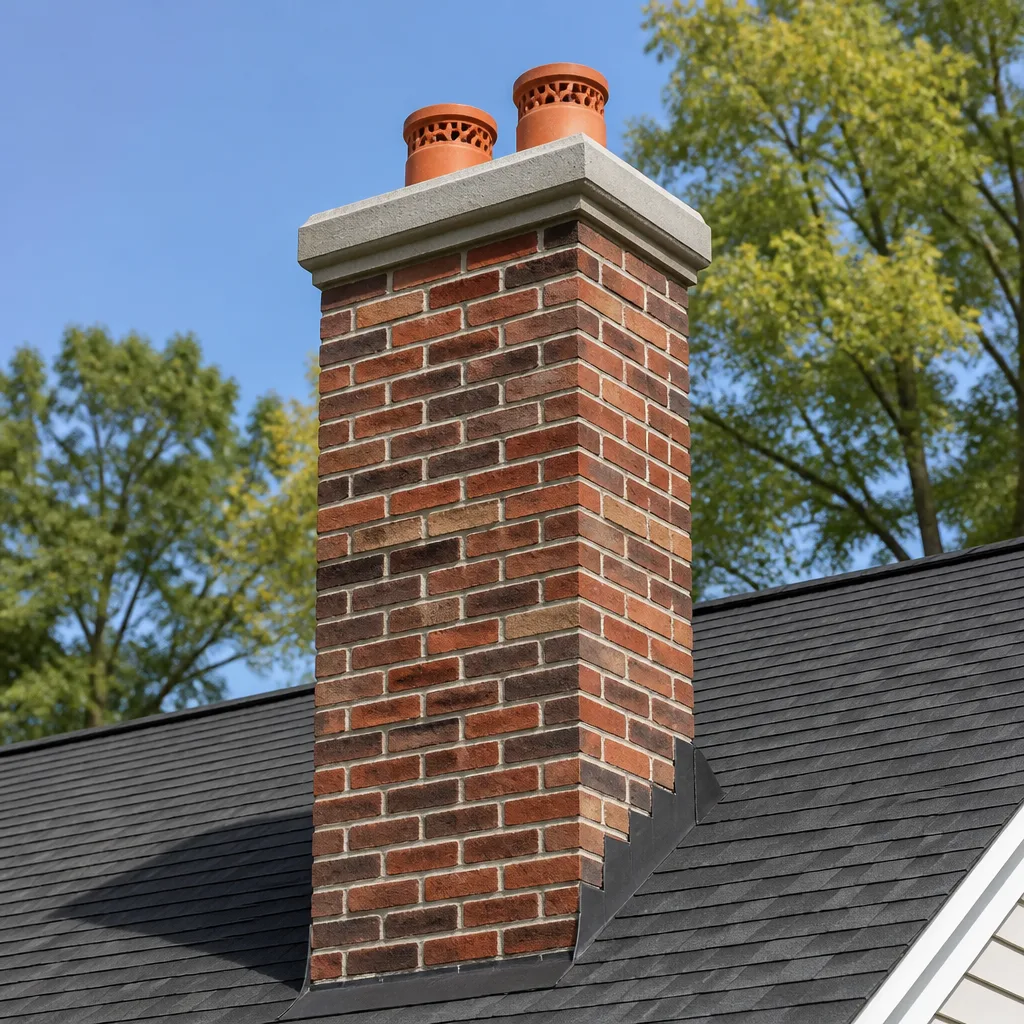
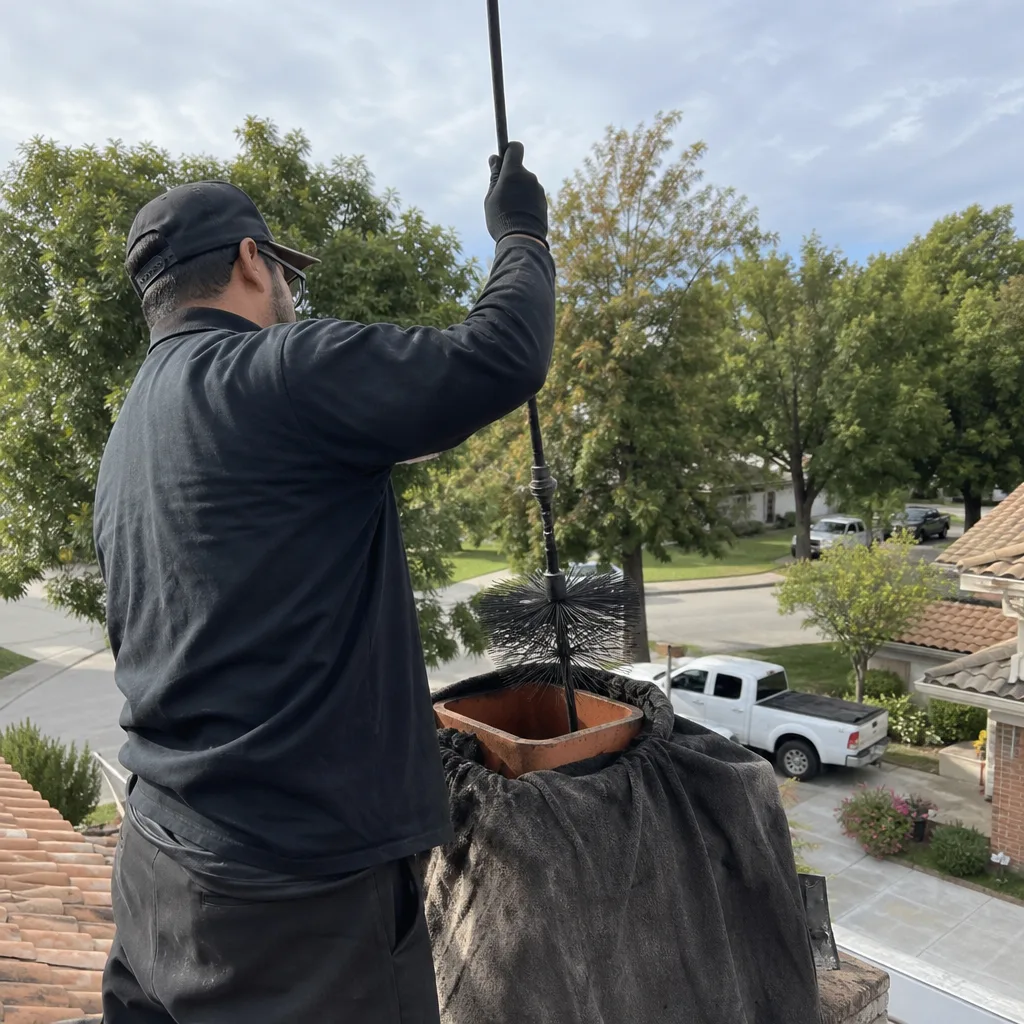
Level 1 sweep and inspection to the NFPA 211 annual standard - flue, crown, cap, and flashing checked and photographed
Chimney sweep logs do not sweep chimneys. They loosen some creosote - which then falls where a brush and vacuum still have to collect it.
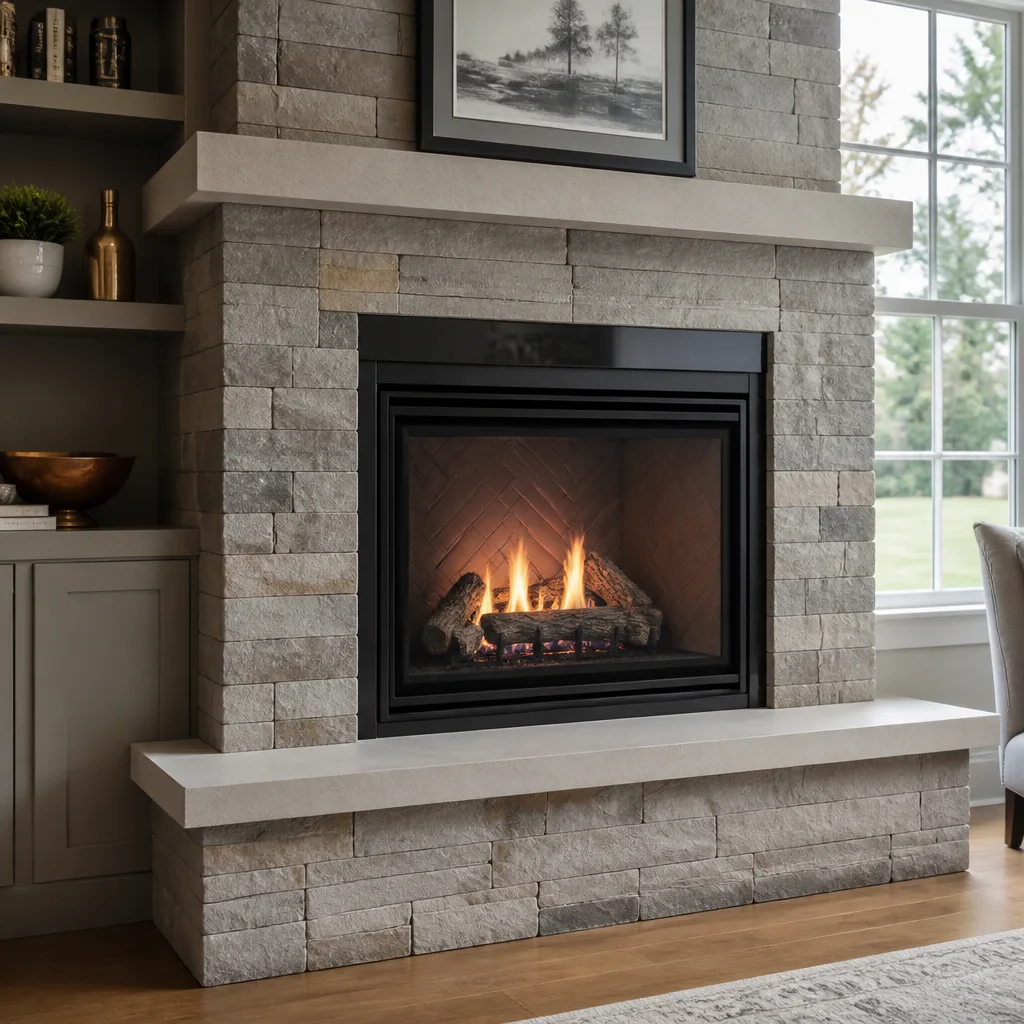
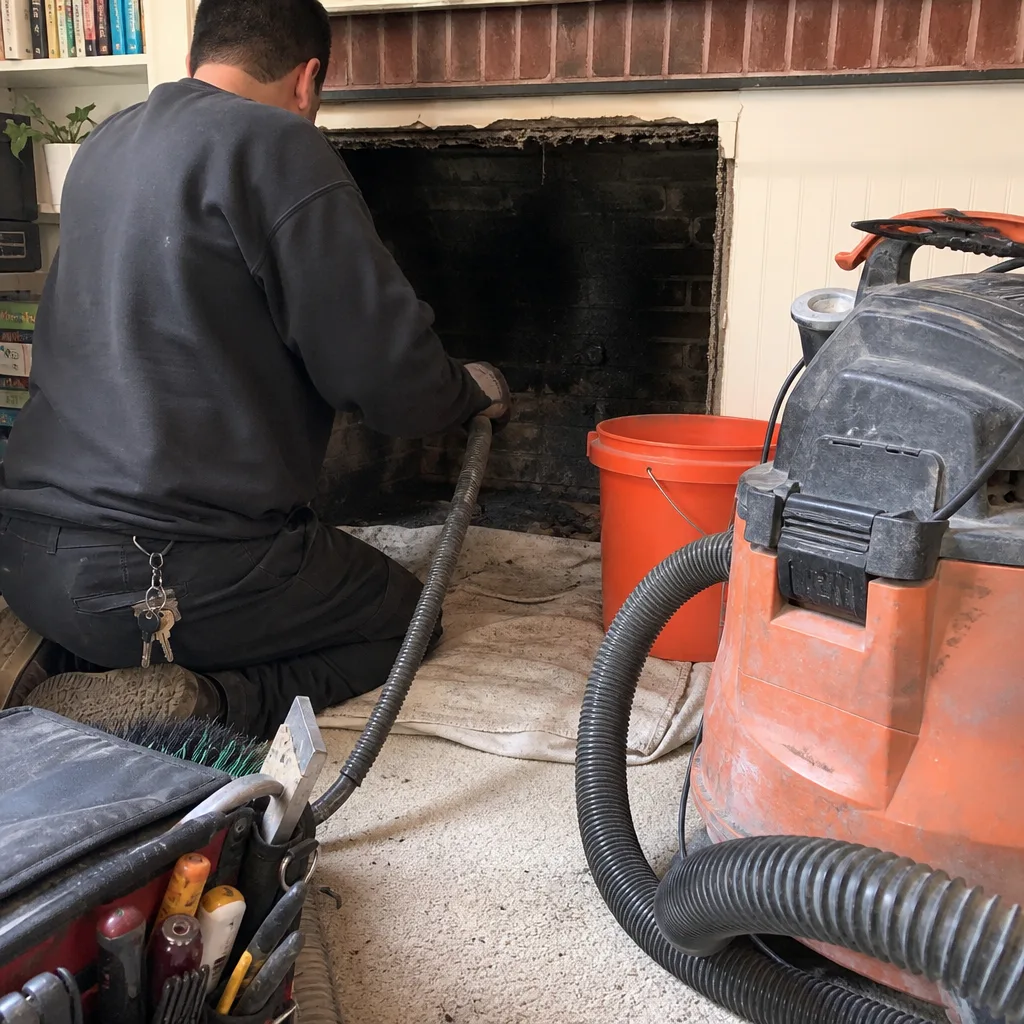 Before
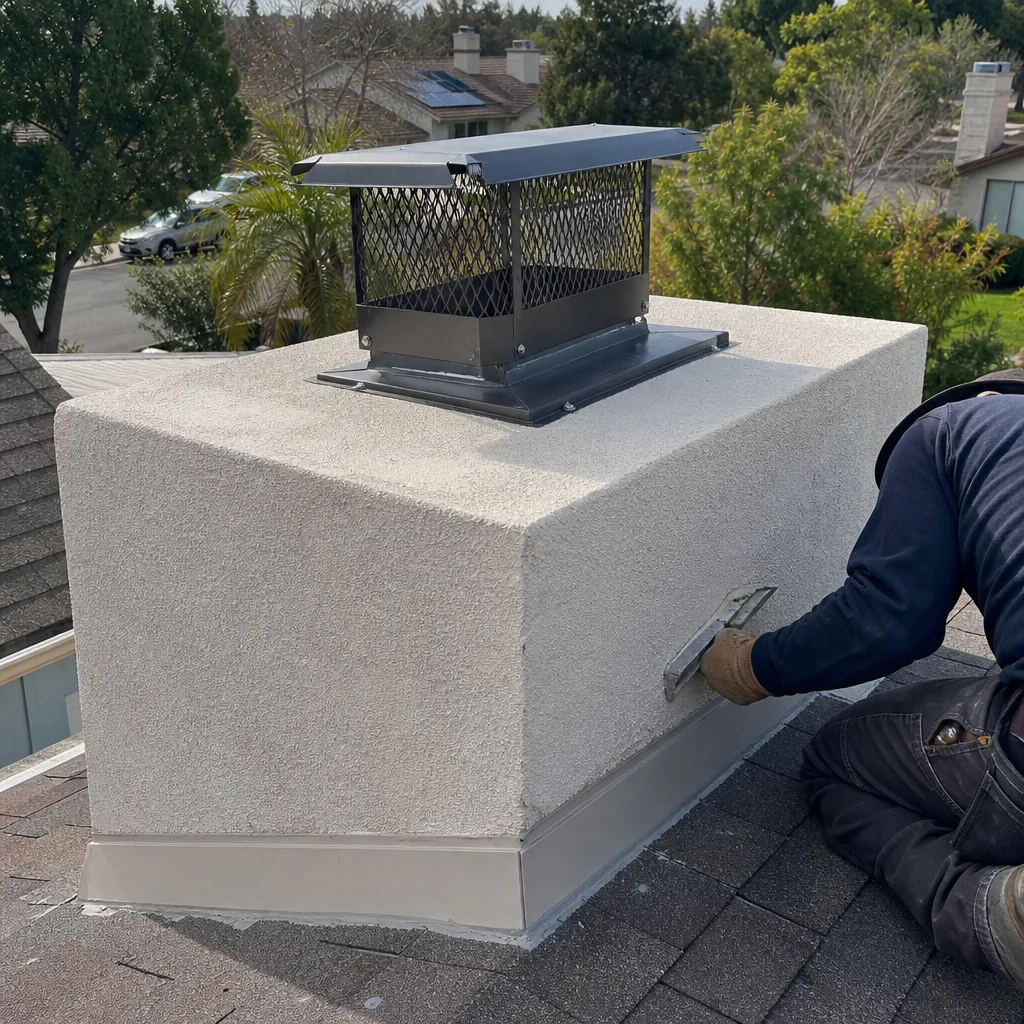 After
After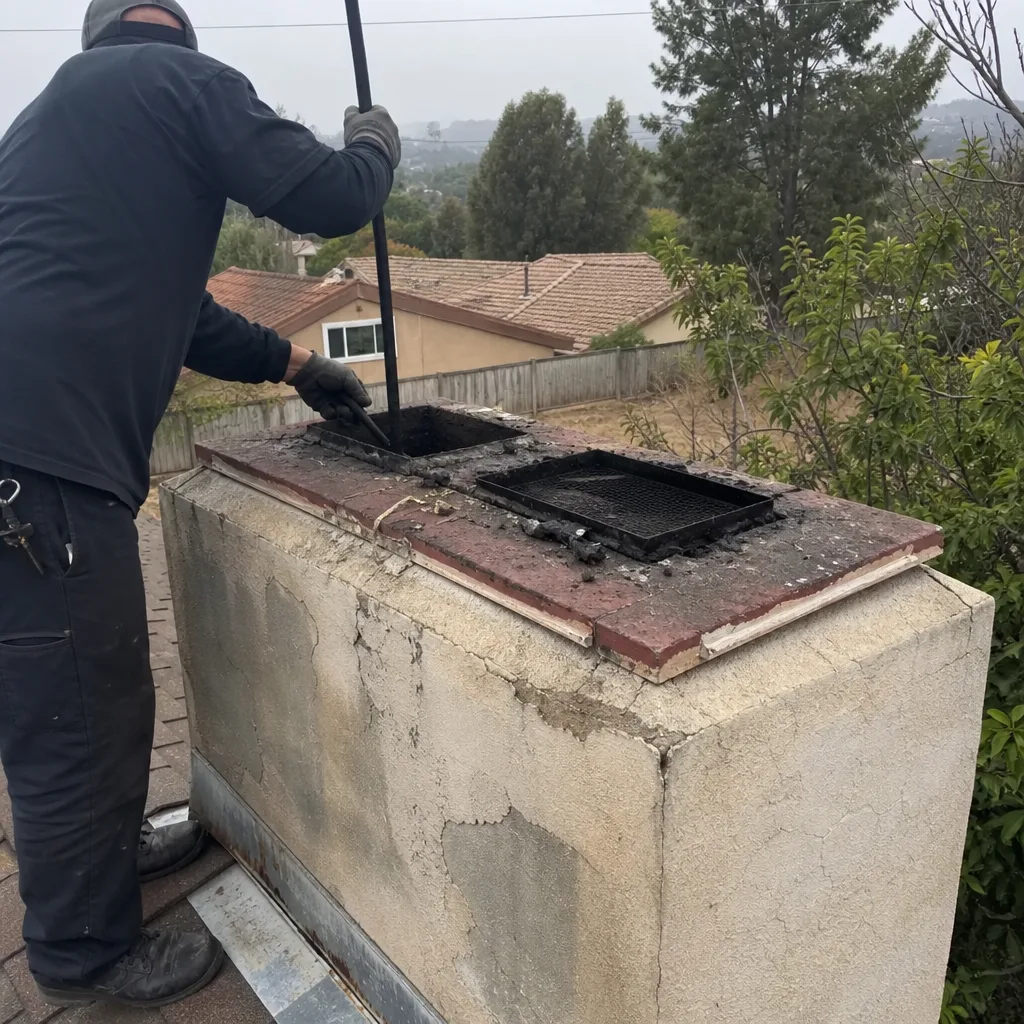 Before
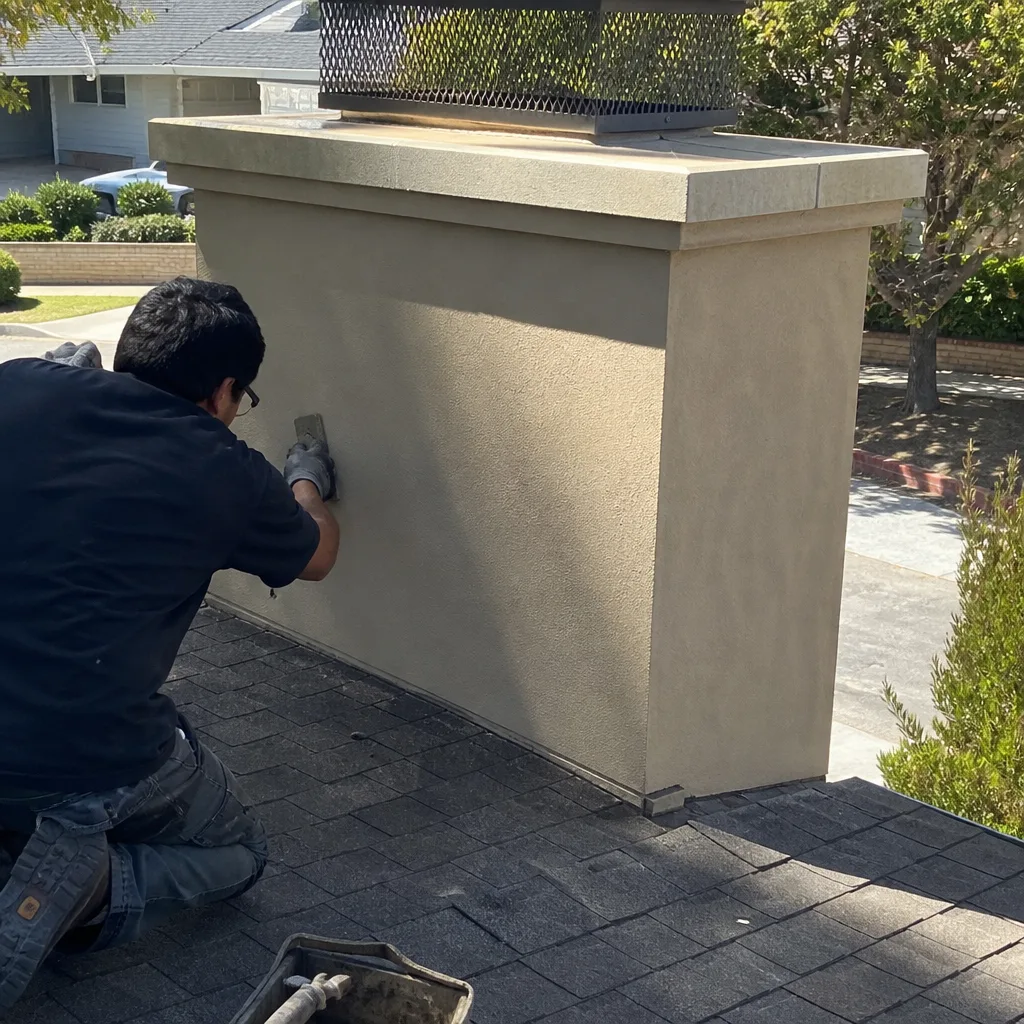 After
After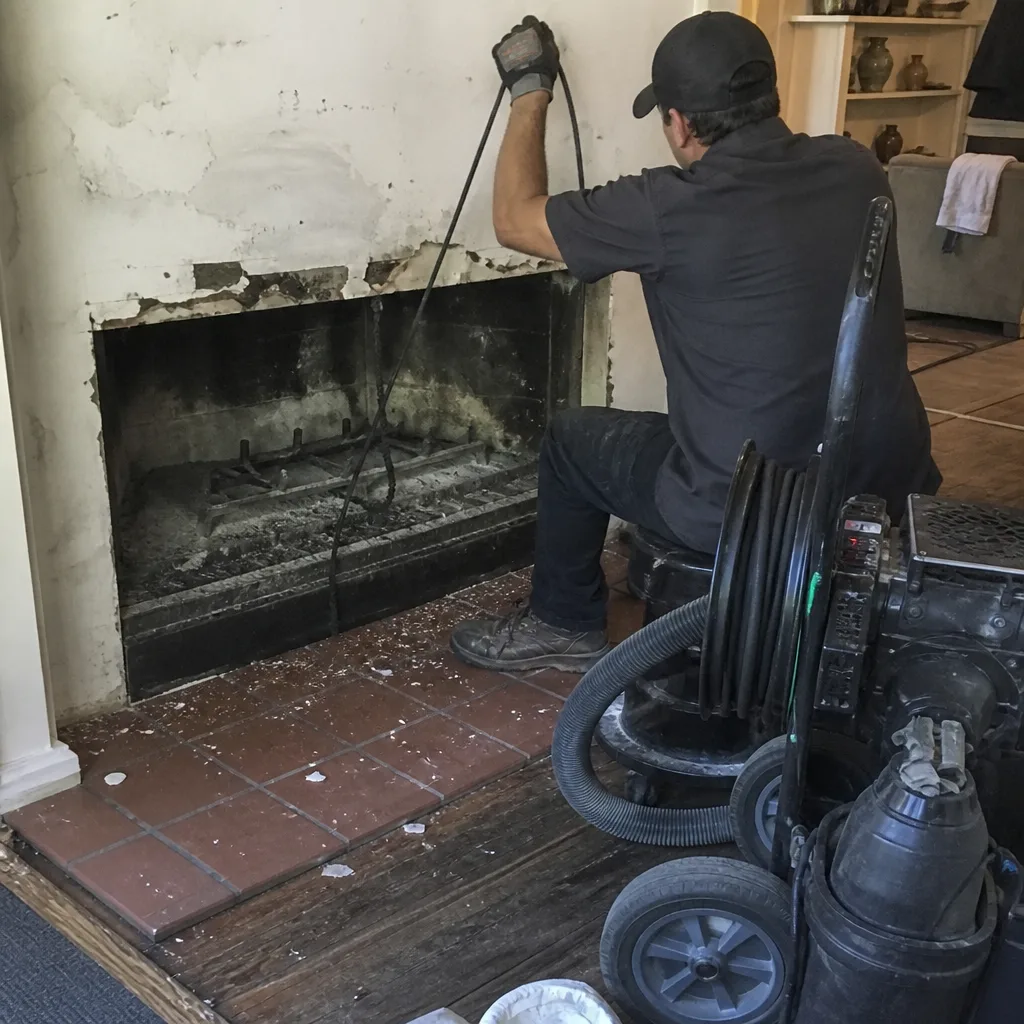 Before
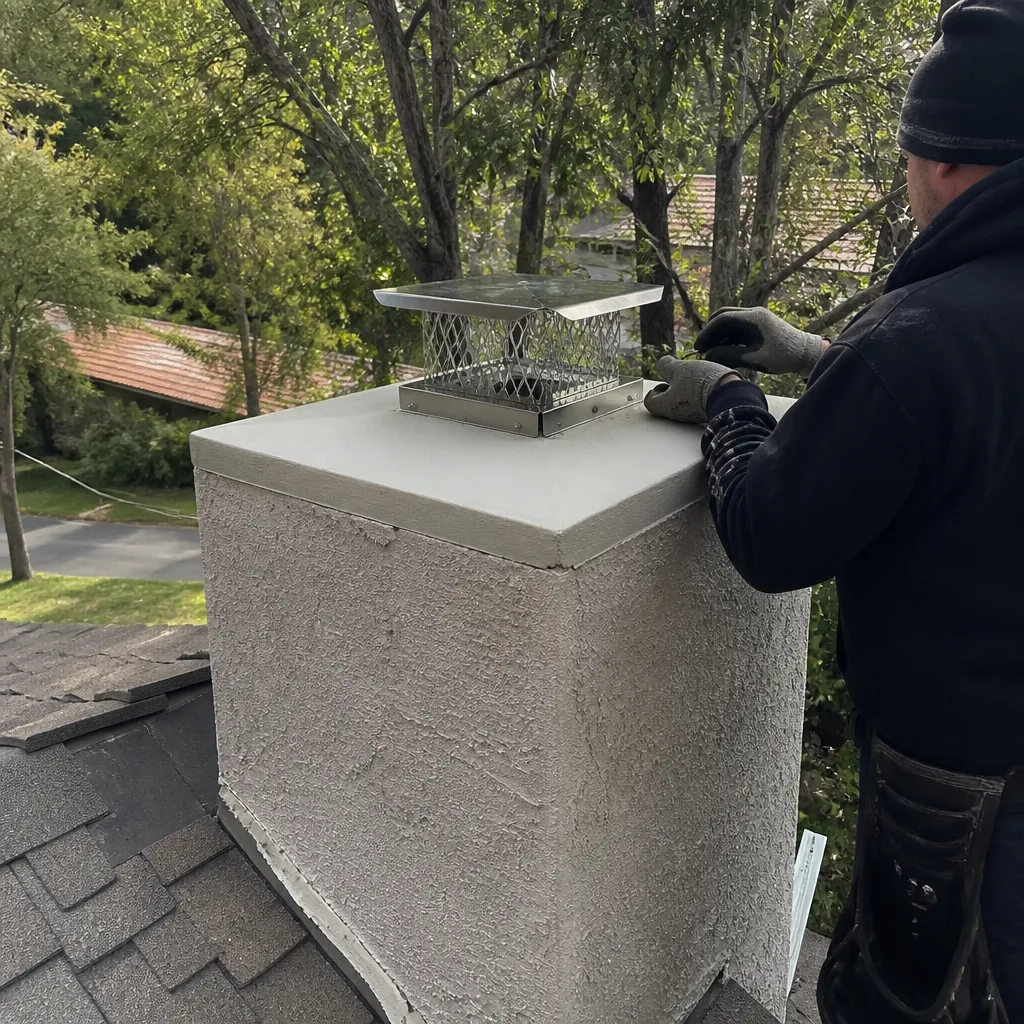 After
AfterFireplace Cleaning in Thousand Oaks, CA
Fireplace cleaning in Thousand Oaks typically runs $149 to $349, depending on creosote buildup, firebox condition, and whether the job includes a Level 1 Inspection. Most appointments are completed in under two hours, and every one starts with a written price before any work begins. If you want a number before booking, call (424) 786-6130 – a live person answers around the clock, not a voicemail.
At Level Two Chimney Thousand Oaks, fireplace cleaning is part of our broader Chimney Cleaning & Sweep in Thousand Oaks service – and it’s never a flashlight-and-done visit. Every cleaning includes a camera scan of the flue liner, a documented photo record delivered to you at job’s end, and a written scope before the tech touches anything. That’s not an upsell. It’s how we’ve worked since 2009 across more than 38,000 chimneys.
Thousand Oaks sits in the Conejo Valley, and the marine-influenced climate here does something specific to fireplaces that gets overlooked: the combination of mild, damp winters and then dry Santa Ana conditions accelerates glazed creosote formation in flues that see infrequent, low-temperature fires. Homeowners in neighborhoods like Newbury Park, Lynn Ranch, and the Lang Ranch area often burn a fire a handful of times each season – which sounds light enough to skip cleaning. It isn’t. Low-burn fires deposit more sticky, hard-to-remove creosote per cord than high-temperature burns do, and that buildup doesn’t announce itself until it’s a Class II or Class III problem.
Corrine Halstead leads our team here in Thousand Oaks, and the standard she holds every job to is the same one this company was built around: name what we found, name what it costs, and document it in writing before asking you to decide anything.
When You Need Fireplace Cleaning
A few clear signals tell you it’s time to call. Some are visible from the firebox, others you’ll only catch if someone runs a camera up the flue – which is why we do that on every visit.
- You smell smoke in the room when the damper is open. Restricted airflow from creosote buildup or debris obstruction pushes combustion gases back into the living space. In Thousand Oaks homes with tight modern weatherstripping, that problem is worse than it was in older builds because there’s less natural draft to compensate.
- You haven’t had the fireplace serviced in more than a year. The Chimney Safety Institute of America recommends annual inspections for any fireplace in use. If you burned wood even four or five times last winter – common in the Conejo Valley’s cooler months – that’s enough to warrant a cleaning check.
- You see a dark, oily or shiny residue on the firebox walls. That’s glazed creosote, which is Class II or moving toward Class III. It doesn’t brush off the way powdery Class I deposits do. It requires a different removal process and carries a much higher ignition risk.
- You’re buying or selling a home in Thousand Oaks. Lenders, insurers, and escrow processes increasingly ask for documented chimney condition. A Level 2 NFPA 211 inspection with a written photo record satisfies that requirement and gives both parties something concrete to work from.
- The firebox bricks or mortar joints look cracked or pitted. Spalling – where the brick face flakes or separates – and deteriorating mortar joints let combustion gases migrate into the wall cavity. This is worth catching early, before a cleaning visit turns into a repair conversation that should have happened two seasons ago.
- You’re lighting your first fire after a summer of no use. Thousand Oaks summers are dry and hot. Insects, birds, and debris find their way into flues that sit open through August and September. A quick camera scan before the first fire of the season takes about fifteen minutes and rules out obstructions that would otherwise push smoke directly into the room.
Our Fireplace Cleaning Process
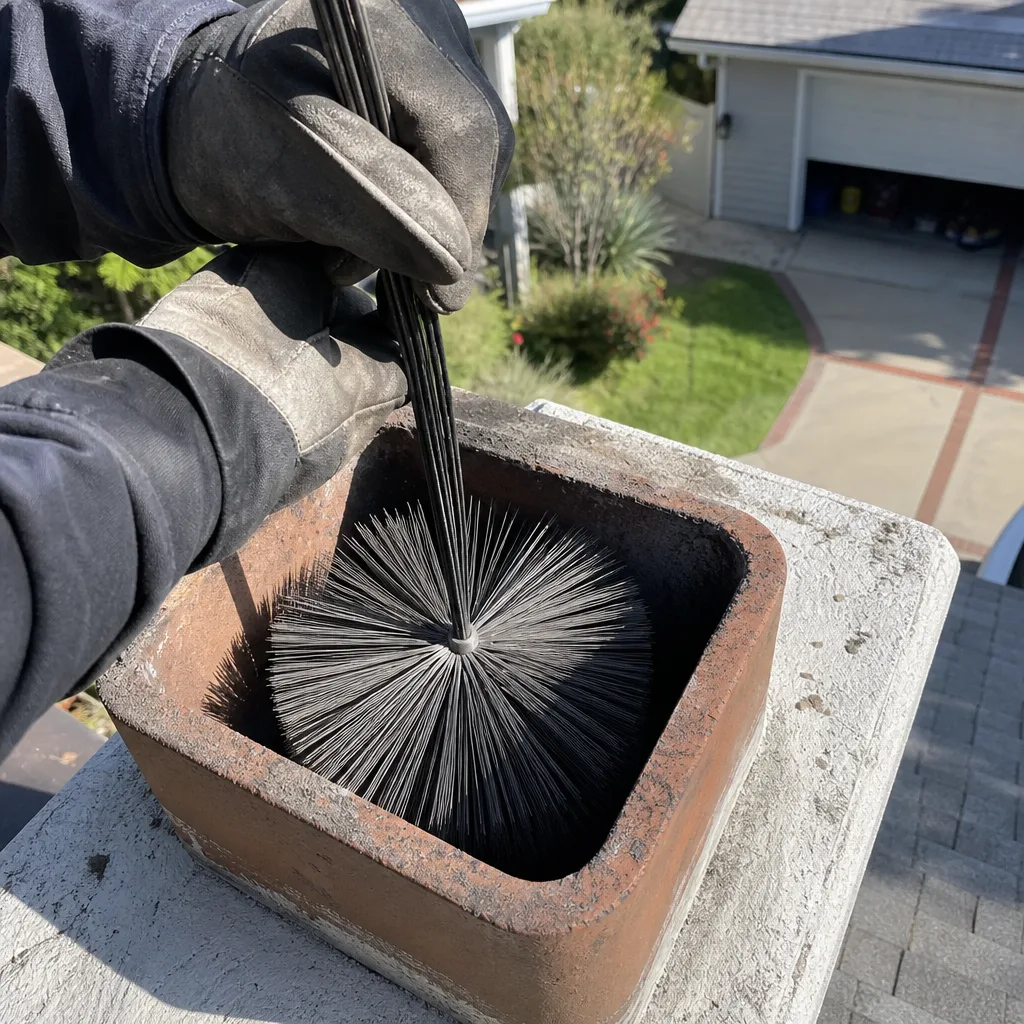
Here’s exactly what happens when a tech arrives for a Level 2 Inspection at your door. No surprises, no scope changes after the work has started.
- Written price and scope before any tool comes out. The tech reviews what you’ve described, does a preliminary visual of the firebox and damper, and gives you a written price with a written scope of work. This is Haven Standard Clause 1 – the price is on paper before anyone starts. If the camera reveals something that changes the scope, you’re told before the work continues, not after.
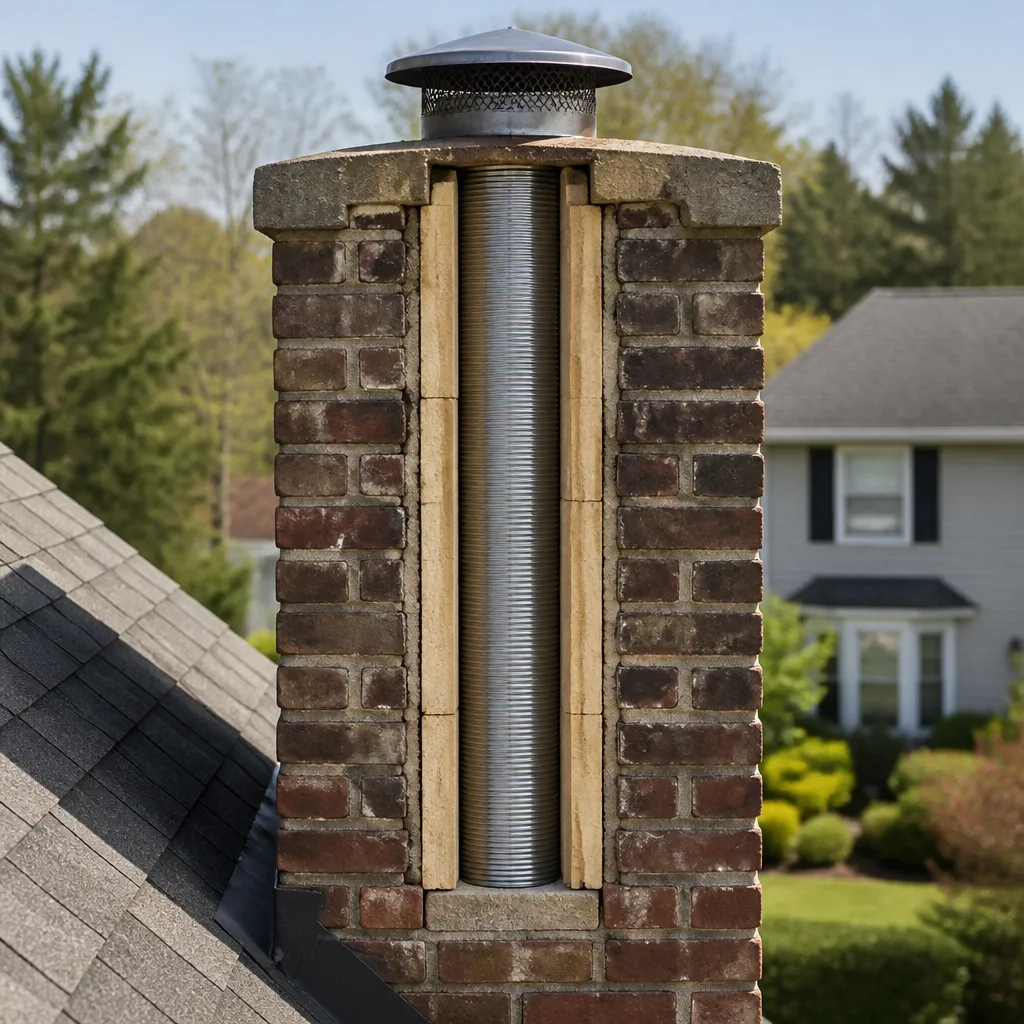
- Camera scan of the flue liner. We run a camera down from the top of the flue and up from the firebox throat, covering the smoke chamber, flue liner, and damper assembly. The footage is documented as part of the photo record. In Thousand Oaks, we frequently find liner cracks in homes built in the 1980s and early 1990s – the clay tile flues common in that era develop horizontal fractures over time that aren’t visible from the firebox opening.
- Creosote classification and removal. Class I deposits – dry, flaky, light gray or black – come off with standard rotary brushes. Class II deposits, which are harder and tar-like, require chemical treatment and additional brushing. Class III glazed creosote is a serious situation; removal typically involves a chemical liquefier applied in stages, and we’ll tell you plainly if that’s what the flue needs and what it costs. Our techs use Copperfield rotary cleaning systems, which give consistent, thorough contact with the liner walls without the aggressive mechanical impact that can fracture older clay tile.
- Firebox and smoke chamber cleaning. The smoke chamber above the damper collects creosote and soot at a rate most homeowners don’t expect – it’s a large, corbelled space, and the rough masonry holds deposits. We clean down into the smoke shelf, which is where water, debris, and concentrated soot collect. Skipping the smoke shelf is a common shortcut. We don’t take it.
- Damper inspection and debris removal. The throat damper gets checked for operation, corrosion, and fit. A damper that doesn’t seal properly lets Thousand Oaks’s dry summer air pull warm household air up the flue year-round, which accelerates corrosion and increases energy loss. If we find a damper issue, it goes in the written report with a price to fix it.
- Photo record delivered to you before we leave. This is Haven Standard Clause 4, and it’s been standard practice here since 2009. You get photos of the liner condition, the firebox, the smoke chamber, and any specific findings – cracks, deposits, debris, damper condition. That record is yours. Some customers use it for insurance documentation; others just want to know their house is in order.
 Before
 After
AfterFireplace Cleaning Pricing in Thousand Oaks
Fireplace cleaning in Thousand Oaks runs $149 to $349 for most residential jobs. Here’s what puts a price in different parts of that range:
| Service Scenario | Typical Price Range |
|---|---|
| Standard cleaning, Class I creosote, single flue | $149 – $199 |
| Class II creosote, chemical treatment required | $199 – $279 |
| Class III glazed creosote removal (multi-stage) | $279 – $349+ |
| Cleaning plus NFPA 211 Level 2 inspection with camera documentation | Included on every visit – not a separate line item |
| Add: smoke chamber resurfacing (HeatShield application) | Quoted in writing after camera assessment |
A few things worth knowing about how pricing works here:
- The written price you get before work starts is the price you pay. There’s no “we found more once we got up there” adjustment after the fact without your explicit written approval first.
- If you have a written estimate from another company, bring it. We offer a free second opinion on any written estimate – and if their scope and ours are the same, we’ll tell you plainly.
- Homes in Thousand Oaks with gas log inserts in masonry fireplaces often need a different cleaning approach than wood-burning fireplaces. Gas logs produce less creosote but more moisture deposits, and the insert itself needs to be pulled for a proper firebox cleaning. If that applies to your fireplace, the tech will note it in the written scope.
Call (424) 786-6130 to get a written estimate – it’s free, and the person who answers can usually give you a preliminary range based on what you describe before anyone comes out.
FAQs – Fireplace Cleaning
How often should I have my fireplace cleaned in Thousand Oaks?
Once per year is the right baseline if you burn wood at all. Thousand Oaks homeowners who burn only a few fires per season sometimes assume that’s too light to warrant a cleaning – but low-temperature, infrequent fires deposit sticky, concentrated creosote faster than high-temperature burns do. If you used the fireplace at all last season, a cleaning check before the next one is the right call. Call (424) 786-6130 and we can talk through what your use pattern actually requires – no obligation, just a straight answer.
What’s the difference between Class I, Class II, and Class III creosote?
Class I is dry and flaky – it brushes off with standard equipment and is the easiest to deal with. Class II is harder, tar-like, and requires chemical treatment combined with mechanical brushing; it’s common in Thousand Oaks fireplaces that see intermittent, low-temperature burns through the winter. Class III is glazed creosote – dense, shiny, and highly flammable – and it can’t be brushed away. It requires Soot Removal with a chemical liquefier applied in stages before mechanical removal is even possible. We classify what we find during the camera scan and tell you exactly which situation you’re in before any work starts.
Can you clean a fireplace that has a gas log insert?
Yes, but the process is different from a standard wood-burning fireplace cleaning. Gas log inserts need to be removed to properly clean the firebox and access the smoke chamber, and the flue liner still requires a camera scan regardless of fuel type – gas burns produce moisture and sulfur deposits that deteriorate mortar joints and tile liners over time. We handle both scenarios regularly in Thousand Oaks. The written scope will reflect exactly what’s involved before anyone starts work.
Do I need a permit for fireplace cleaning in Thousand Oaks?
Cleaning itself doesn’t require a permit in Thousand Oaks. Repairs are a different matter: liner relining, firebox rebuilds, and smoke chamber resurfacing work may require a building permit through the City of Thousand Oaks Building and Safety Division depending on scope. If the cleaning reveals a condition that leads to a repair recommendation, we’ll note the permit question in the written report and help you understand what the process involves. We don’t start repair work that requires a permit without confirming that piece first.
What You Walk Away With
Every fireplace cleaning job at Level Two Chimney Thousand Oaks produces a specific set of documents. This isn’t a promise we make – it’s what the Haven Standard requires, and it’s been how every job has been run since 2009.
- Written price and written scope delivered before work starts (Haven Standard Clause 1)
- Camera footage and photo record of liner condition, smoke chamber, and firebox (Haven Standard Clause 4)
- Written findings on any condition observed – cracks, creosote class, damper wear, debris – in plain language
- Written warranty on the work performed, backed by the 365-Day Done Right Promise
Corrine Halstead built the Thousand Oaks operation around one idea: a homeowner shouldn’t have to take a tech’s word for what was found or what was done. The camera, the photos, and the written record exist so you don’t have to.
If you’ve got a fireplace that hasn’t been serviced in a while – or you’re buying a home in Thousand Oaks and need documented condition before closing – call (424) 786-6130. A live person answers. You’ll have a written price before anyone shows up, and a photo record before we leave.
Written by Corrine Halstead, Owner at Level Two Chimney Thousand Oaks, serving Thousand Oaks.