
Last updated September 21, 2026
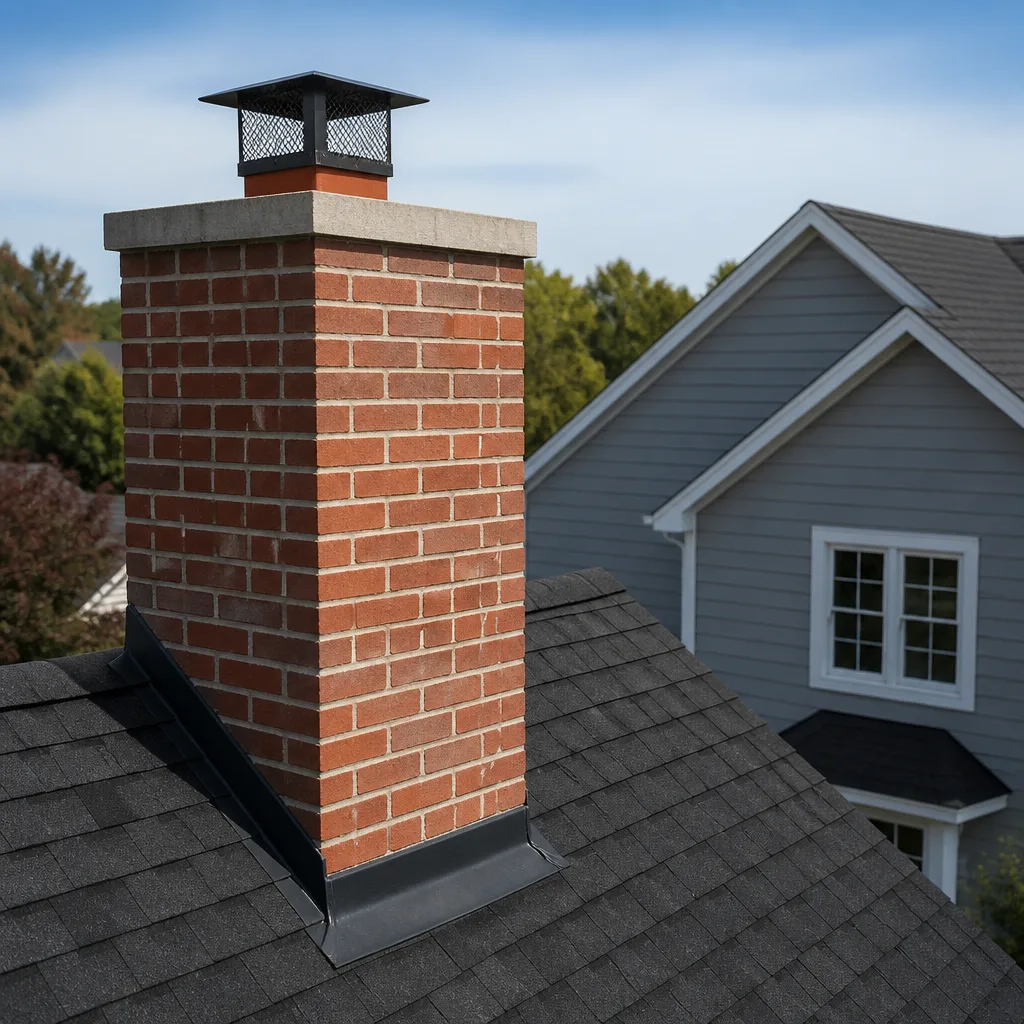
Level 1 sweep and inspection to the NFPA 211 annual standard - flue, crown, cap, and flashing checked and photographed
Chimney sweep logs do not sweep chimneys. They loosen some creosote - which then falls where a brush and vacuum still have to collect it.
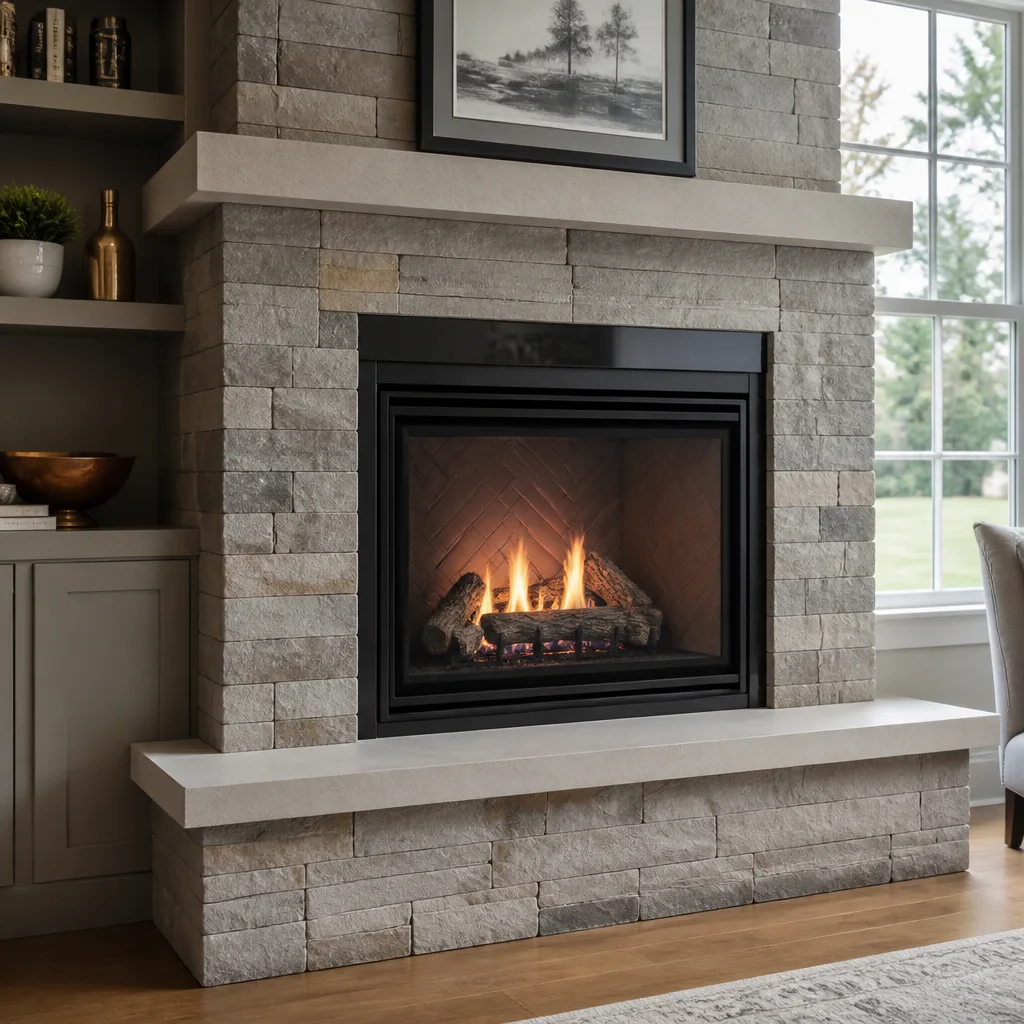
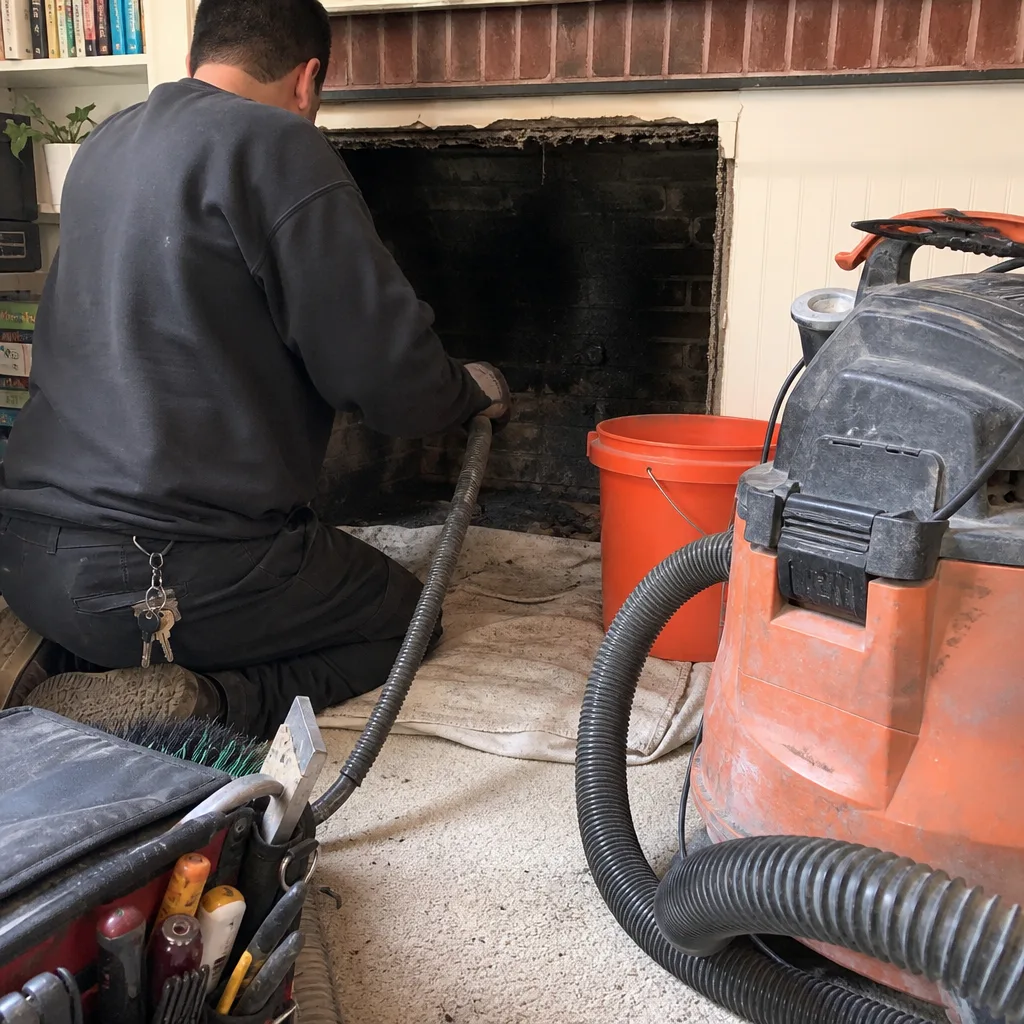 Before
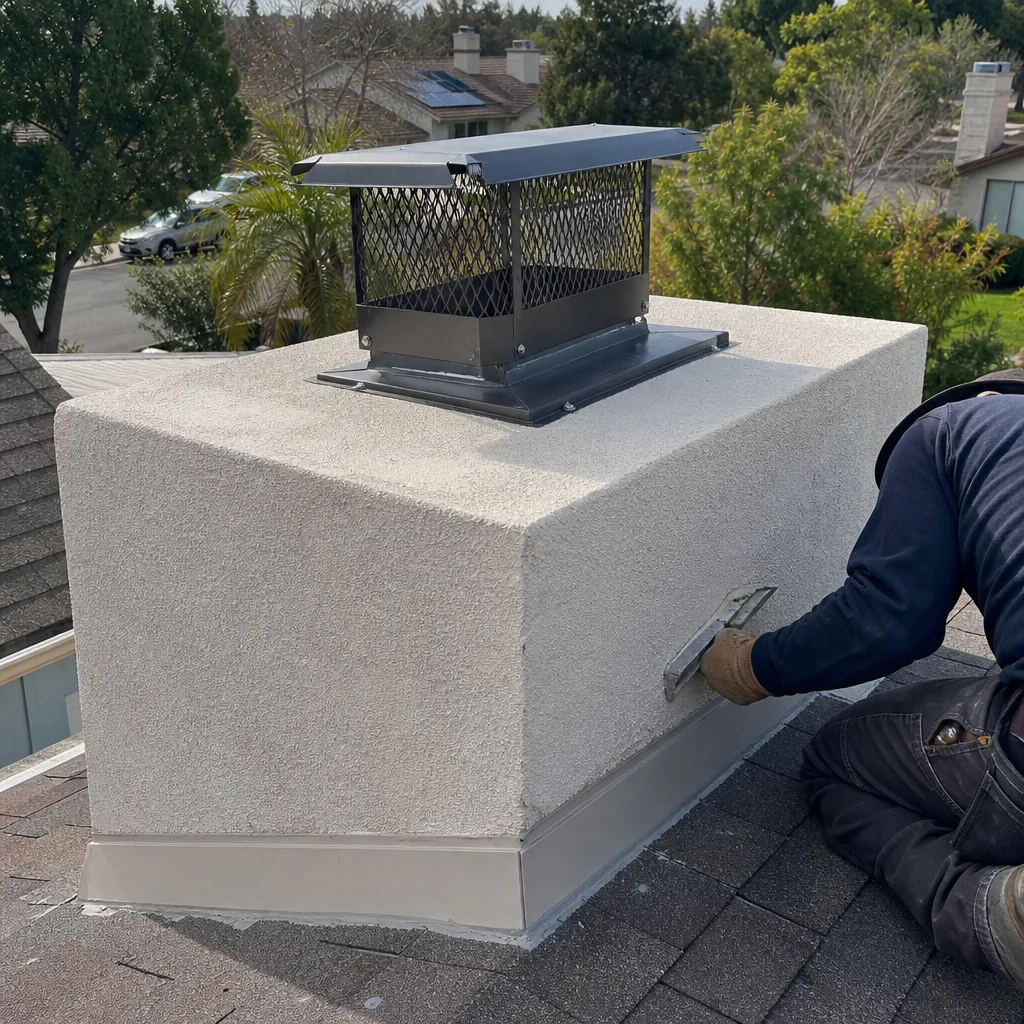 After
After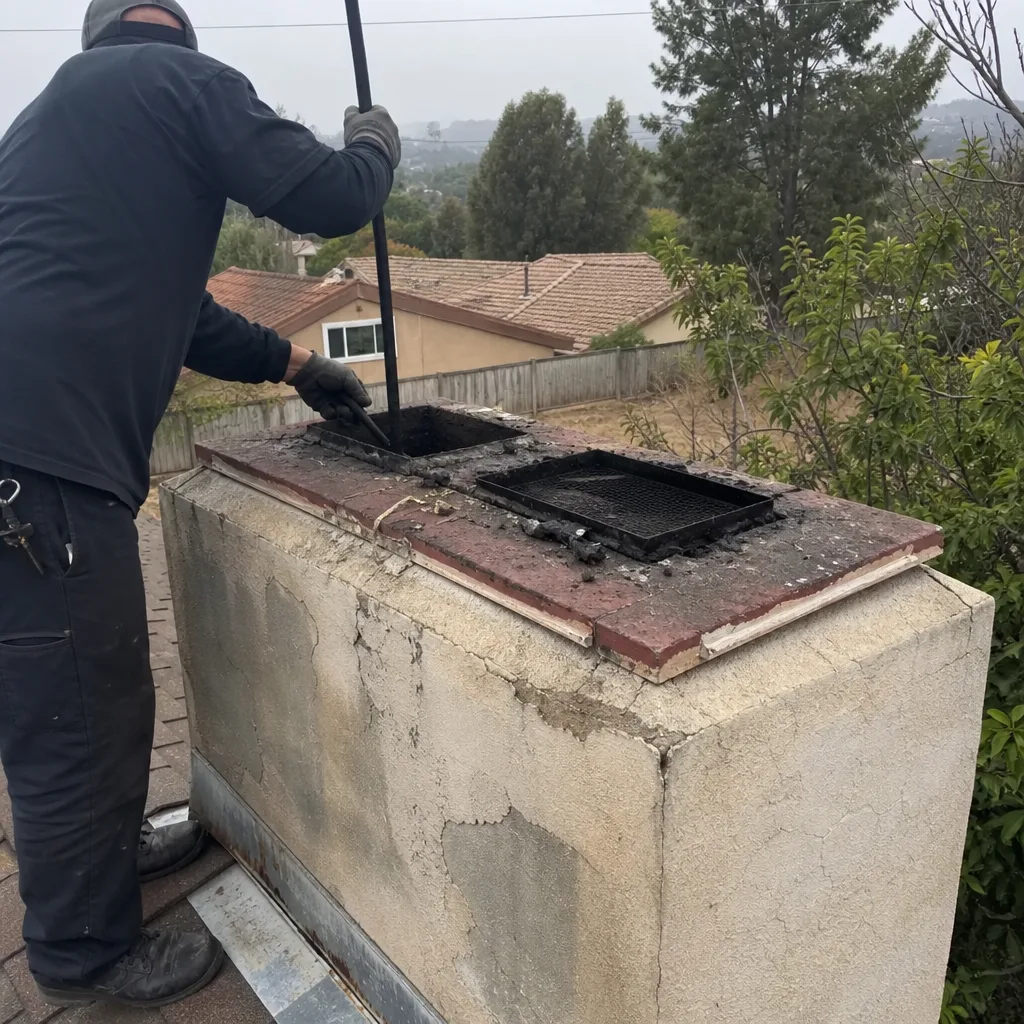 Before
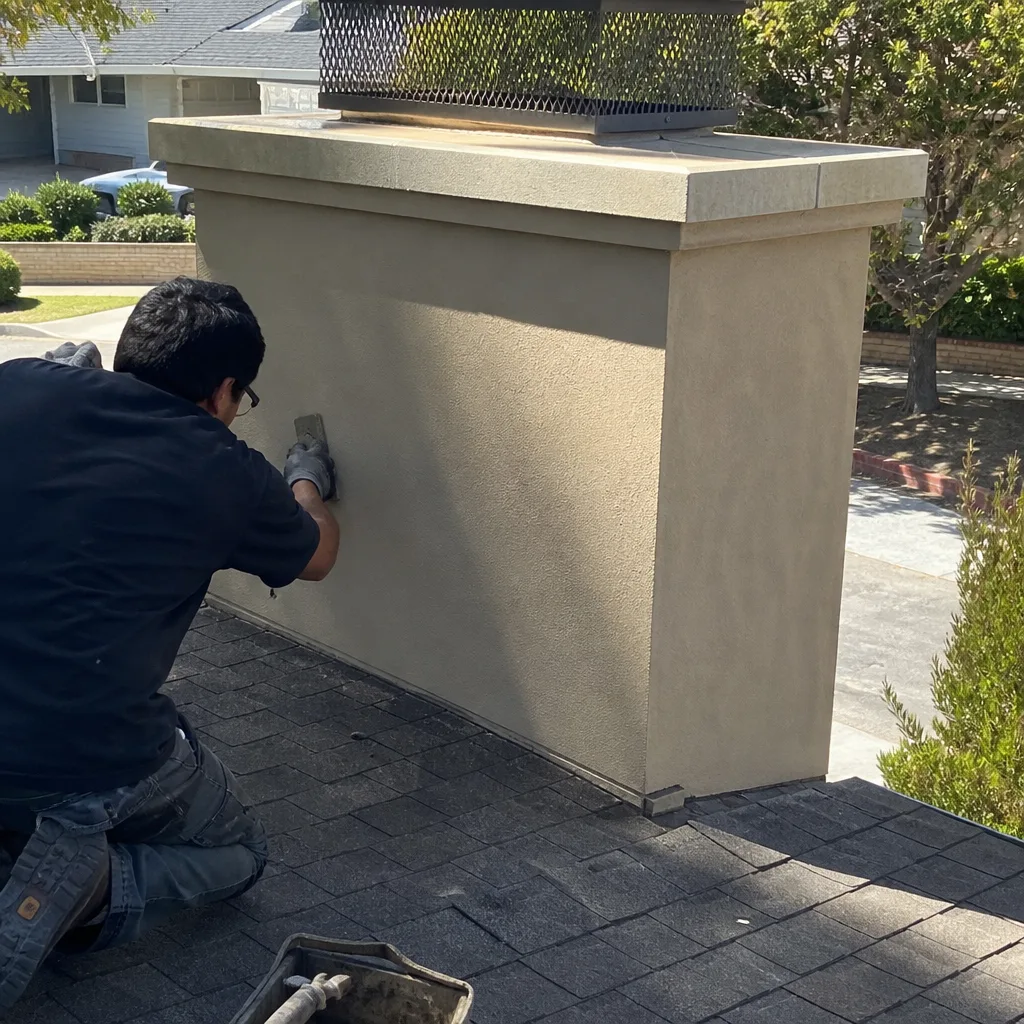 After
After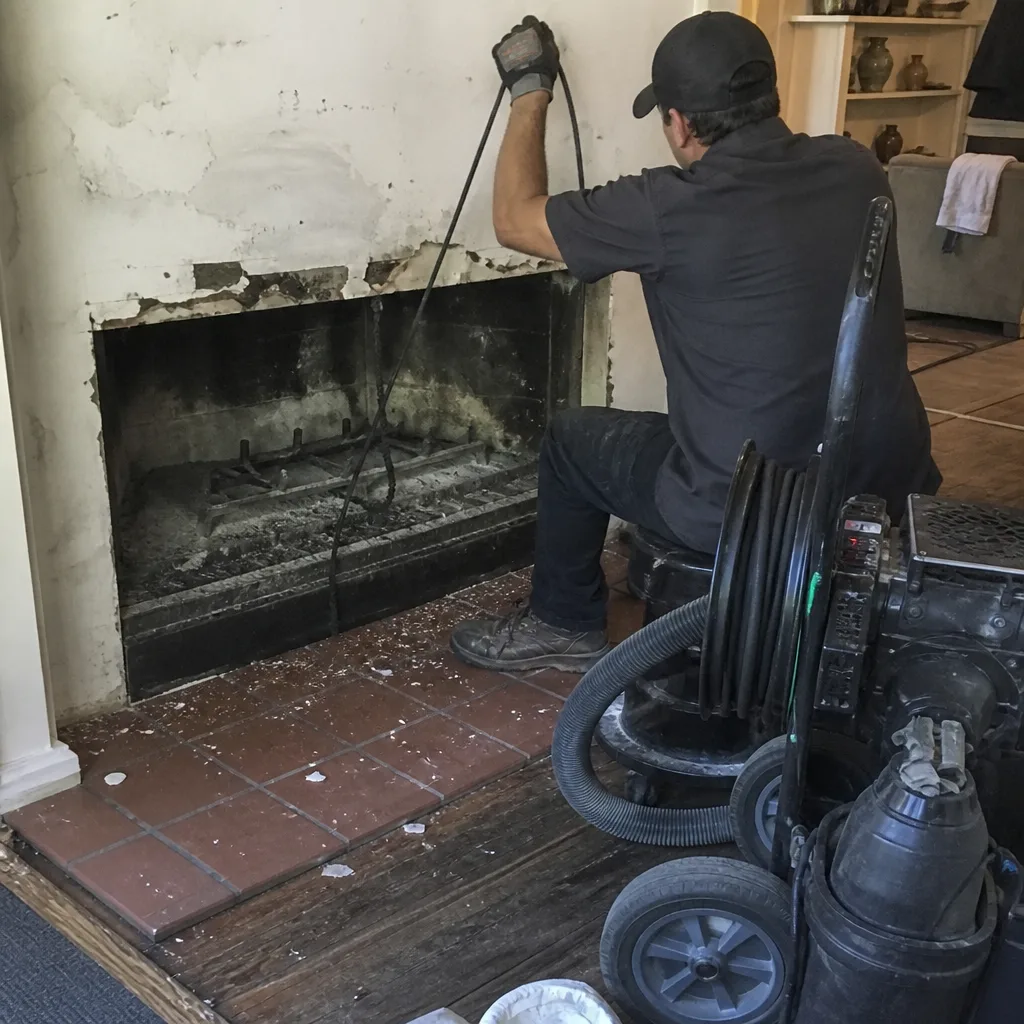 Before
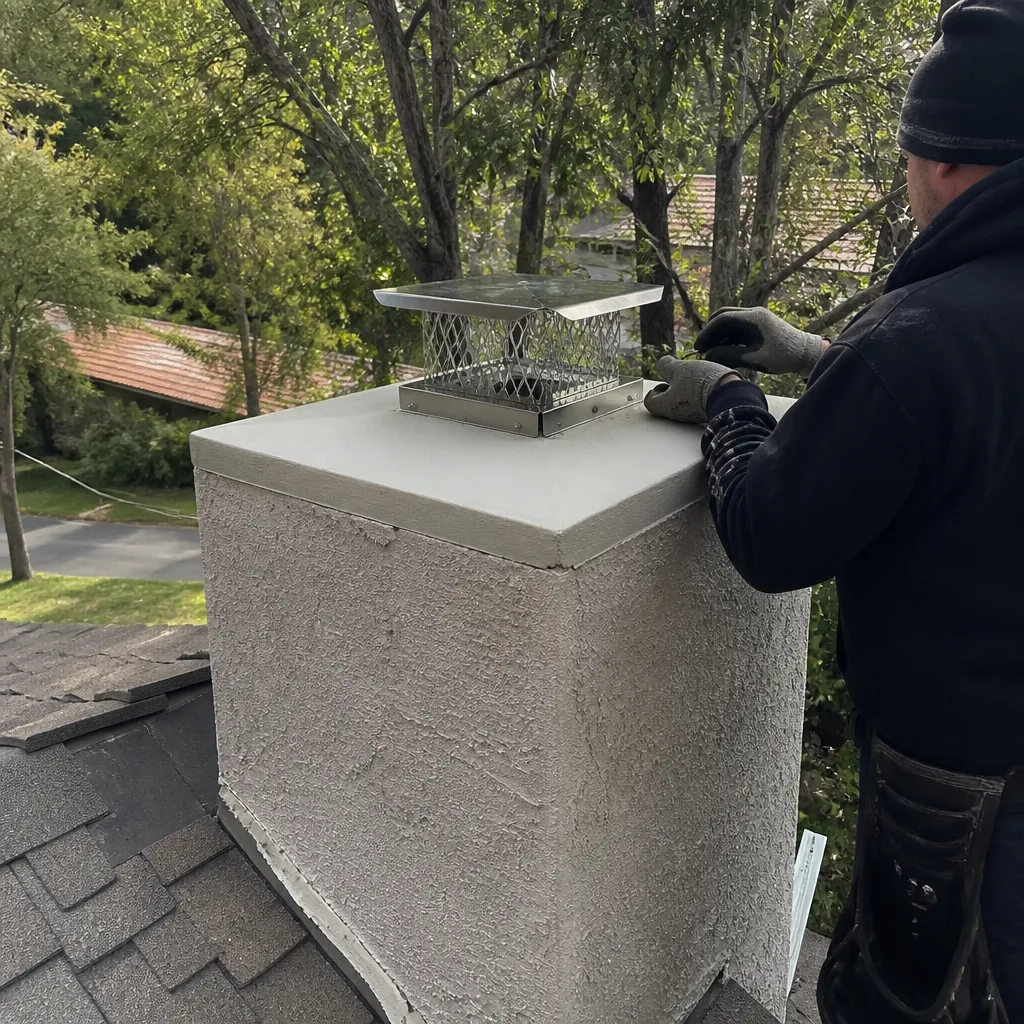 After
AfterDIY vs Professional Chimney Cleaning: The Thousand Oaks Homeowner’s Decision Guide
A chimney brush kit costs about $40 at any hardware store in Thousand Oaks and removes loose soot about as well as our brushes do. The problem isn’t the brush. It’s that removing soot is the second step, and the first step requires a camera to determine whether you should be burning at all. In this guide, we’ll draw the exact line where DIY scope ends and professional scope begins, what a self-cleaning record means for your insurance and disclosure obligations, and why even a competent DIY cleaning still leaves critical safety checks undone.
Quick Answer
Most Thousand Oaks homeowners can physically clean their own firebox and smoke shelf with a basic brush kit, but DIY chimney cleaning cannot produce the documented inspection record that insurers, real estate disclosures, and the NFPA 211 standard require. A professional sweep includes a camera-scan inspection of the flue liner, crown, and cap condition, plus a written record that protects you financially. The real comparison isn’t brush versus brush; it’s $40 in equipment versus the liability exposure of an undocumented system.
Table of Contents
- What Homeowners Can Legitimately Clean Themselves
- The Equipment and Training Gap
- Stage 1, 2, and 3 Creosote: Why the Brush Type Matters
- The Real Cost Comparison: DIY Kit vs. Documented Professional Sweep
- The Liability Exposure of Self-Cleaning Without Documentation
- The Thousand Oaks Case for Professional Inspection After DIY Cleaning
- Common Mistakes to Avoid
- When to Call a Professional
- Frequently Asked Questions
 Before
 After
AfterWhat Homeowners Can Legitimately Clean Themselves
Let’s be direct about what a motivated homeowner can actually accomplish. We’ve inspected thousands of chimneys in Thousand Oaks since 2009, and we’ve seen competent DIY work. We’ve also seen the aftermath of overreach. The line is clearer than most guides admit.
Within DIY scope:
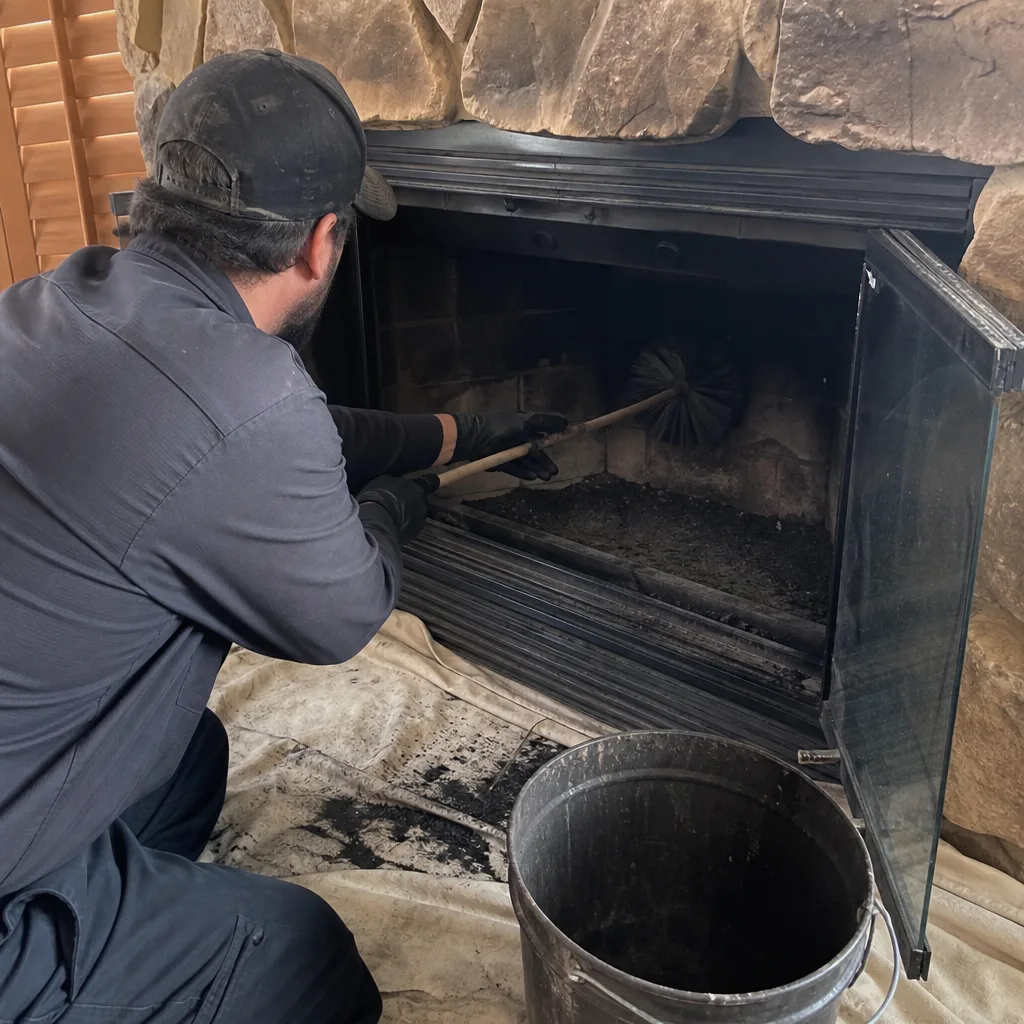
- Firebox soot and ash. The accessible floor and walls of the firebox, below the damper, can be brushed and vacuumed with a standard shop vac fitted with a HEPA filter. This is cosmetic maintenance, not safety inspection, but it does reduce acidic residue that degrades refractory mortar over time.
- Smoke shelf debris. If you can reach it through the damper opening with a long-handled brush and a mirror, loose debris on the smoke shelf can be removed. The smoke shelf is the flat area behind the damper where downdrafts deposit debris. In Thousand Oaks, we regularly find dried oak leaves and bird nesting material here, especially on properties near the Santa Monica Mountains Conservancy trails where wildlife access is higher.
- Visible damper blade and frame. Surface rust and soot can be wire-brushed and lightly oiled with high-temperature lubricant. Check that the blade opens fully and seats closed without gaps.
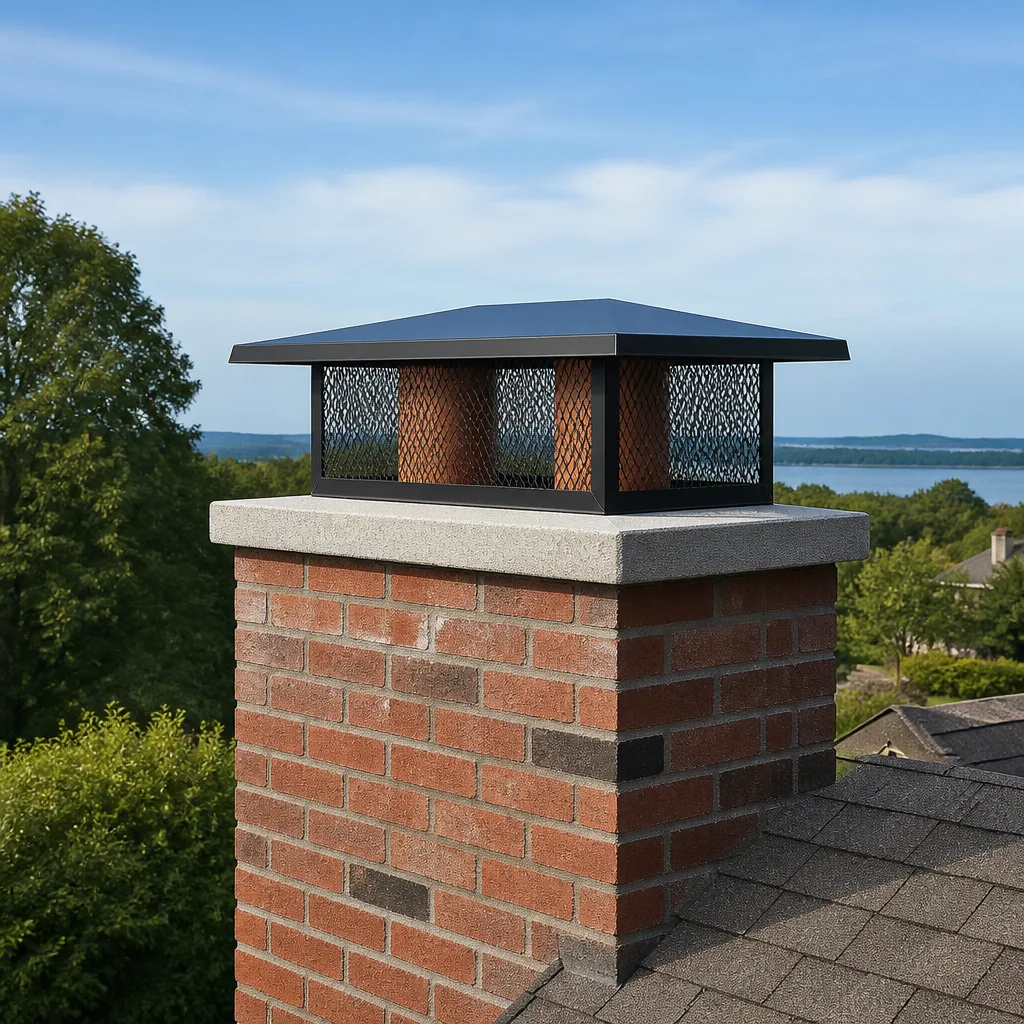
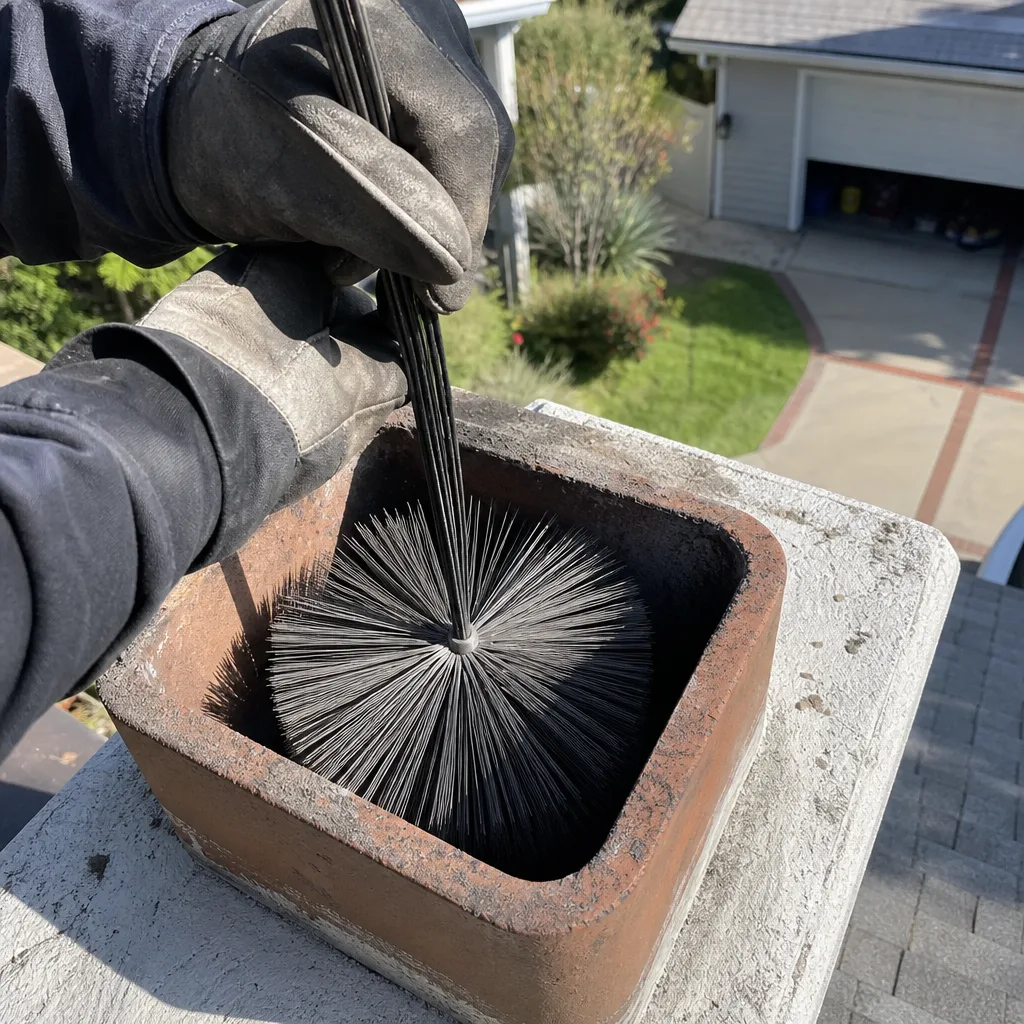
- Exterior cap screen. If you can safely access your roof and your cap has a mesh spark arrestor, brushing accumulated creosote from the screen is reasonable maintenance. Use a stiff wire brush, not a power tool that can deform the mesh.
Beyond DIY scope:
- Anything above the smoke shelf in the flue itself
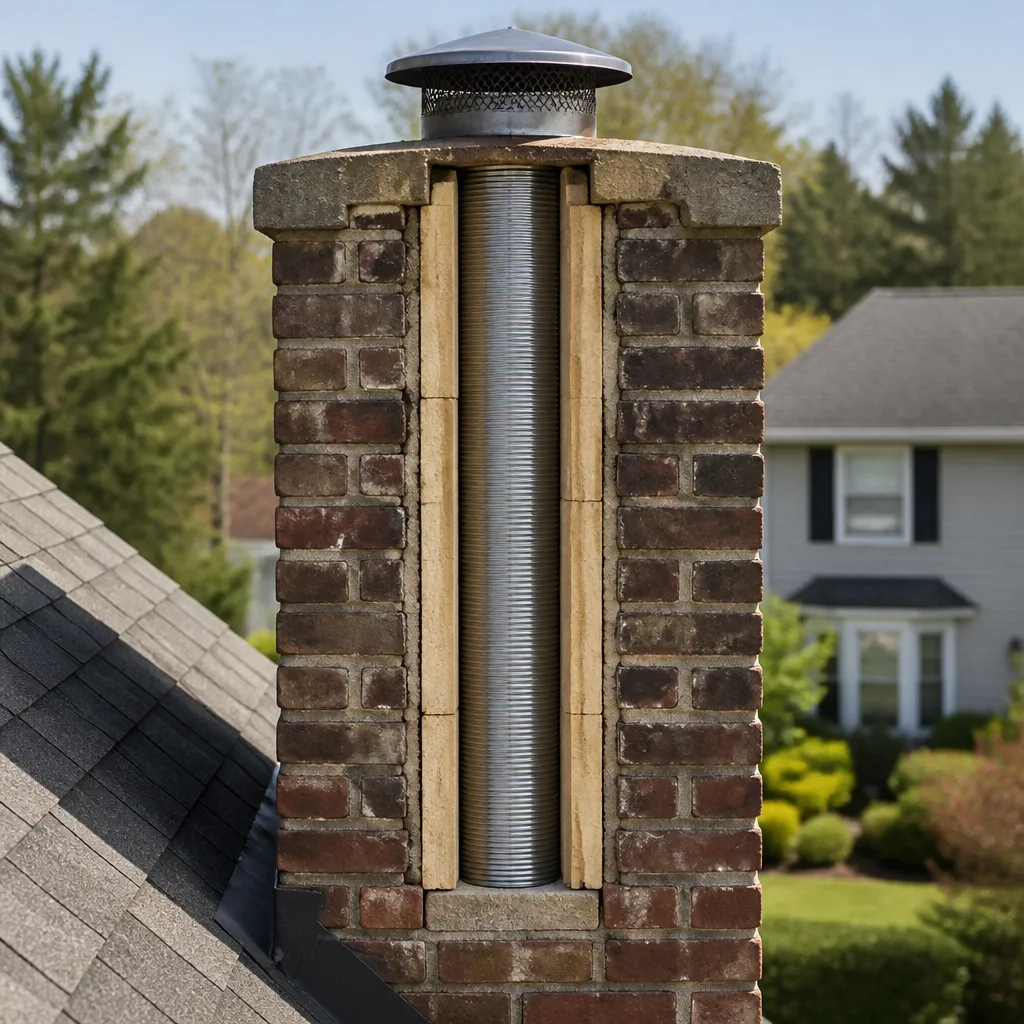
- The flue liner interior, including clay tile joints and stainless steel seam welds
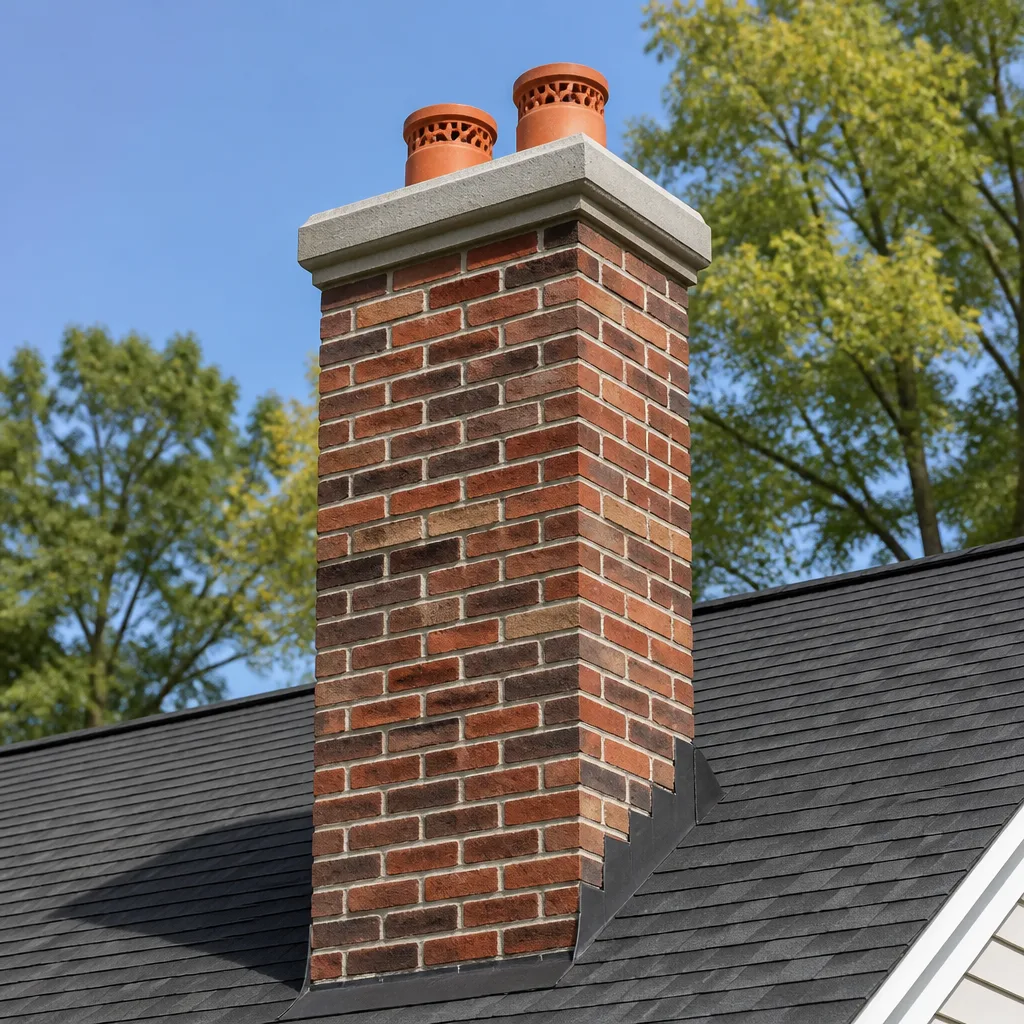
- The chimney crown, crown wash, or flashing integrity
- Smoke chamber walls (the sloped area above the damper that funnels smoke into the flue)
- Chimney exterior for seismic cracking, spalling, or mortar joint failure
The critical distinction: DIY cleaning addresses debris you can see and reach. Professional scope addresses system integrity you cannot see without specialized equipment. A clean firebox with a cracked flue liner is still a fire hazard. A brushed smoke shelf with a failed crown wash is still a water damage vector that will destroy the chimney from the outside in.
In the Chimney Cleaning & Sweep in Thousand Oaks work we do, the brush is maybe 15% of the visit. The other 85% is inspection, documentation, and determining whether the system is fit for use.
The Equipment and Training Gap
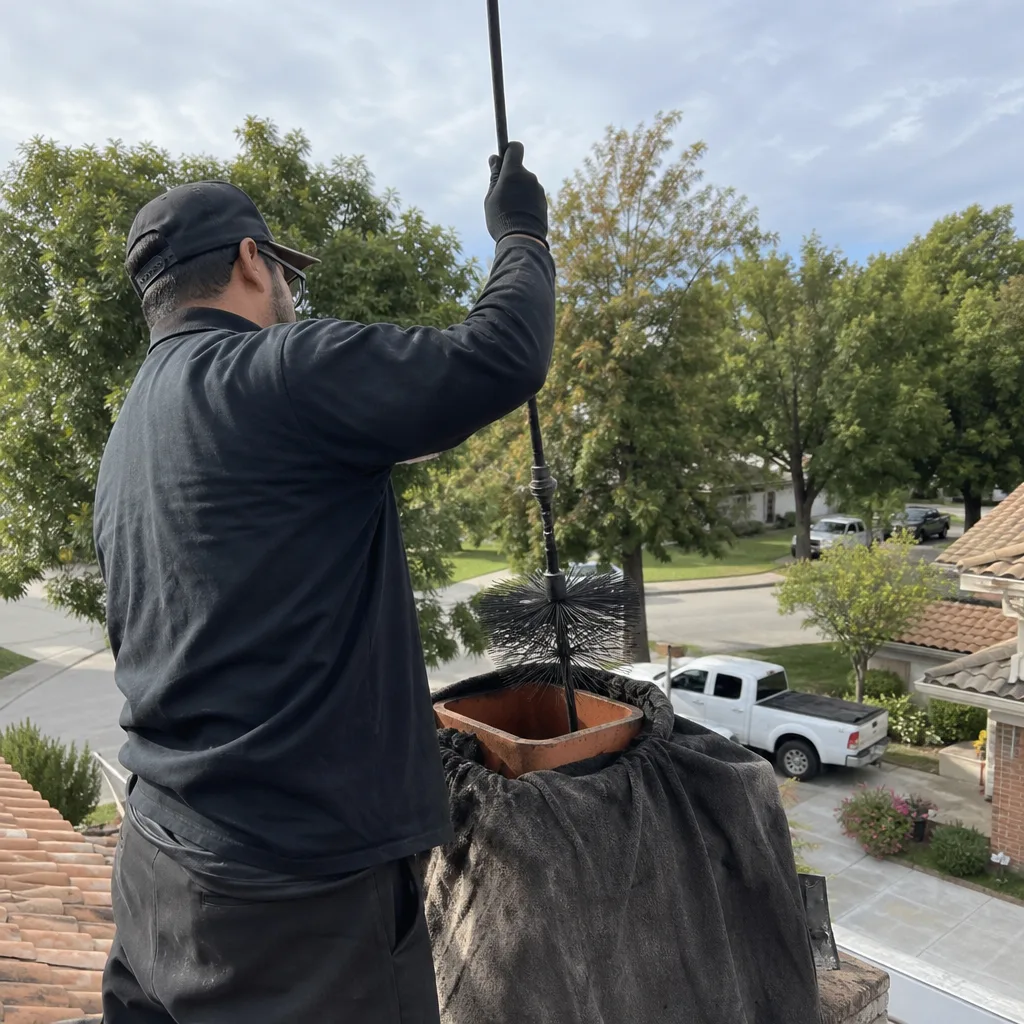
Here’s what a professional sweep brings that a $40 brush kit cannot replicate. This isn’t about superiority; it’s about scope. These tools exist because the problems they detect are not visible to the unaided eye.
Chimney inspection camera system. A self-leveling, high-resolution camera on a flexible rod that transmits live video from the full length of the flue. We use this on every Level Two Chimney Thousand Oaks home visit. It reveals cracked clay tiles, shifted tile joints, gaps at the flue collar, corrosion pitting in stainless steel liners, and creosote buildup patterns that indicate drafting problems. A homeowner cannot buy meaningful flue access without this. A flashlight and mirror from below shows you the first 18 inches. The camera shows you everything.
Combustible gas analyzer. Measures flue gas temperature, oxygen percentage, and carbon monoxide spillage potential. This tells us whether the system is drafting properly, not just whether it’s clean. Poor draft causes creosote formation regardless of how recently you brushed.
Drop protection and HEPA containment. Professional-grade HEPA vacuums with triple filtration, not shop vacs that recirculate fine particulate. Respirable crystalline silica and creosote particulate are actual health hazards, not marketing language. We also carry full room containment for occupied homes.
Proper disposal pathway. Creosote debris is hazardous waste in California. We transport to licensed disposal facilities. A homeowner putting creosote in the green bin or household trash is violating Ventura County waste regulations.
Training recognition:
- NFPA 211 standard for chimney construction, maintenance, and inspection
- Understanding of California Building Code Chapter 10 and Ventura County amendments
- Recognition of Stage 2 and Stage 3 creosote (discussed below) and when mechanical removal risks liner damage
- Seismic damage indicators specific to Southern California construction eras
The training gap matters because the wrong action on the wrong creosote type destroys the liner you’re trying to protect. We’ve replaced liners in Thousand Oaks homes where aggressive DIY brushing fractured brittle clay tiles that were already heat-stressed. The homeowner saved $200 on a sweep and spent $4,800 on a Chimney Repair in Thousand Oaks.
Stage 1, 2, and 3 Creosote: Why the Brush Type Matters
This is where most DIY guides fail their readers. They treat creosote as a single substance. It’s not. The stage determines whether your brush helps, harms, or does nothing.
Stage 1 (Soot): Loose, powdery, black. Brushes off easily with a standard wire or poly brush. This is what most homeowners imagine when they think “dirty chimney.” If this is all you have, a DIY kit works fine for the accessible areas. Stage 1 forms with proper fuel, adequate air supply, and hot fires. We see this in Thousand Oaks homes that burn seasoned hardwood and maintain their draft settings.
Stage 2 (Crunchy or flaky): Hardened, porous, breaks into chips. This requires a rotary loop or chain whip system driven by a drill, not hand brushing. Attempting to brush Stage 2 with a standard brush polishes the surface, compacts the layer, and makes it harder to remove later. Worse, the impact force can chip clay tile edges or deform stainless steel liner corrugations. We’ve documented this damage with our camera systems. Stage 2 indicates a combustion problem, usually insufficient air or marginal fuel moisture. The cleaning fixes the symptom; the inspection must find the cause.
Stage 3 (Glaze): Shiny, tar-like, hardened to a near-liquid-crystal structure. This is the dangerous form. It has the lowest ignition temperature and the highest fuel value if it catches fire. A standard brush has essentially no effect. Removal requires specialized chemical treatment, controlled heat application, or mechanical removal with equipment that risks liner damage if misapplied. Stage 3 glaze is a chimney fire waiting to happen. In our Thousand Oaks work, we find it most often in homes where the previous owner burned unseasoned wood or where the fireplace was used as a primary heat source during power outages.
The critical point: You cannot determine your creosote stage from below with a flashlight. You cannot determine it by how recently you cleaned. The camera inspection reveals the stage, location, and thickness. A homeowner brushing Stage 2 or 3 creosote with a $40 kit is not cleaning their chimney. They’re creating a false sense of security while potentially damaging the system.
Our Chimney Cleaning & Sweep in Thousand Oaks service includes camera verification of creosote stage before any mechanical cleaning begins. Clause 4 of the Haven Standard requires that photo record.
The Real Cost Comparison: DIY Kit vs. Documented Professional Sweep
Let’s put actual numbers on the table. This is where information gain matters, because competitor pages either omit pricing entirely or give national ranges that don’t reflect the Thousand Oaks market.
DIY path, fully equipped:
| Item | Cost |
|---|---|
| Basic brush kit (rods + brush) | $35-$55 |
| Drop cloths, tape, containment | $25-$40 |
| HEPA vacuum rental or purchase | $80-$200 |
| Proper disposal fee (hazardous waste) | $25-$50 |
| Roof safety equipment (harness, anchor) | $150-$300 |
| Your time (4-6 hours first attempt) | - |
| Total first-year DIY cost | $315-$645 |
Professional sweep in Thousand Oaks:
| Service Level | Typical Range | What It Includes |
|---|---|---|
| Standard sweep with Level 1 inspection | $175-$250 | Brush cleaning, basic visual inspection, no camera |
| Level 2 camera-scan sweep (Haven Standard) | $275-$395 | Full camera inspection, documented photo record, written condition report |
| Heavy creosote removal (Stage 2-3) | $450-$750 | Rotary mechanical cleaning, chemical treatment if needed, full documentation |
The price gap narrows significantly when you equip DIY properly. But the comparison is still wrong, because it omits the value of the deliverable.
What the professional price produces that DIY cannot:
- A written inspection report with photo documentation, dated and signed
- A written price for any recommended work before it begins (Haven Standard Clause 1)
- A 365-Day Done Right Promise on all work performed
- A record recognized by insurers, home inspectors, and real estate disclosure requirements
- Detection of problems outside cleaning scope: liner cracks, crown failure, seismic damage, cap deterioration
The documented record is not an administrative extra. It is the product. In our experience with Level Two Chimney Thousand Oaks home customers, the documentation prevents disputed claims, supports insurance filings after chimney fires, and satisfies buyer due diligence in home sales. A photo of a cracked flue tile from our camera system has resolved more disputes than any verbal assurance could.
Materials matter too. When we install liners or repair crowns, we source through our Haven buying network from DuraFlex, HeatShield, and Gelco specifically to keep customer prices honest. A homeowner buying retail quantities pays 40-60% more for the same materials if they attempt self-installation.
The Liability Exposure of Self-Cleaning Without Documentation
This section addresses the question most guides avoid because it’s uncomfortable. What happens legally and financially if you clean your own chimney and something goes wrong?
Homeowner’s insurance claims. After a chimney fire or CO incident, insurers investigate maintenance records. A documented professional inspection and cleaning record, especially one that includes a camera-scan photo archive, supports your claim that you maintained the system properly. A DIY cleaning with no documentation leaves you arguing from memory against an adjuster with a checklist. We’ve been called to document chimney fire damage for insurance investigations in Thousand Oaks, and the absence of professional records consistently complicates the homeowner’s position.
California real estate disclosure (TDS Section C). Sellers must disclose known defects and maintenance history. “Chimney cleaned annually by Level Two Chimney Co., inspection report attached” is a clear disclosure. “Cleaned it myself” requires you to attest to your own competence and leaves you exposed if the buyer’s inspector finds conditions you missed. In Thousand Oaks’s active market, where homes in Lang Ranch and North Ranch regularly sell above ask, a clean professional record reduces transaction friction.
NFPA 211 compliance. The standard requires annual inspection, not just cleaning. A homeowner cannot self-certify compliance. If a tenant, guest, or subsequent owner is harmed, your DIY maintenance record does not demonstrate due diligence to the standard that courts and insurers apply.
Product liability and warranty. Factory-built fireplace warranties often require professional maintenance to remain valid. Self-cleaning voids these protections. We’ve encountered this with HeatShield applications and DuraFlex liner installations where the manufacturer’s warranty terms explicitly require certified sweep documentation.
The exposure is not theoretical. In 2019, we inspected a chimney in the Conejo Oaks area after a sale fell through. The seller had cleaned it himself for years. The buyer’s inspector found a cracked flue liner and evidence of past chimney fire damage. The seller had no documentation to show the condition predated his ownership or that he had addressed it. The sale delayed six weeks, and the seller ultimately paid for a full liner replacement to close.
Clause 4 of the Haven Standard exists precisely because we saw this pattern repeatedly. A photo record on every job, archived and retrievable, protects everyone involved.
The Thousand Oaks Case for Professional Inspection After DIY Cleaning
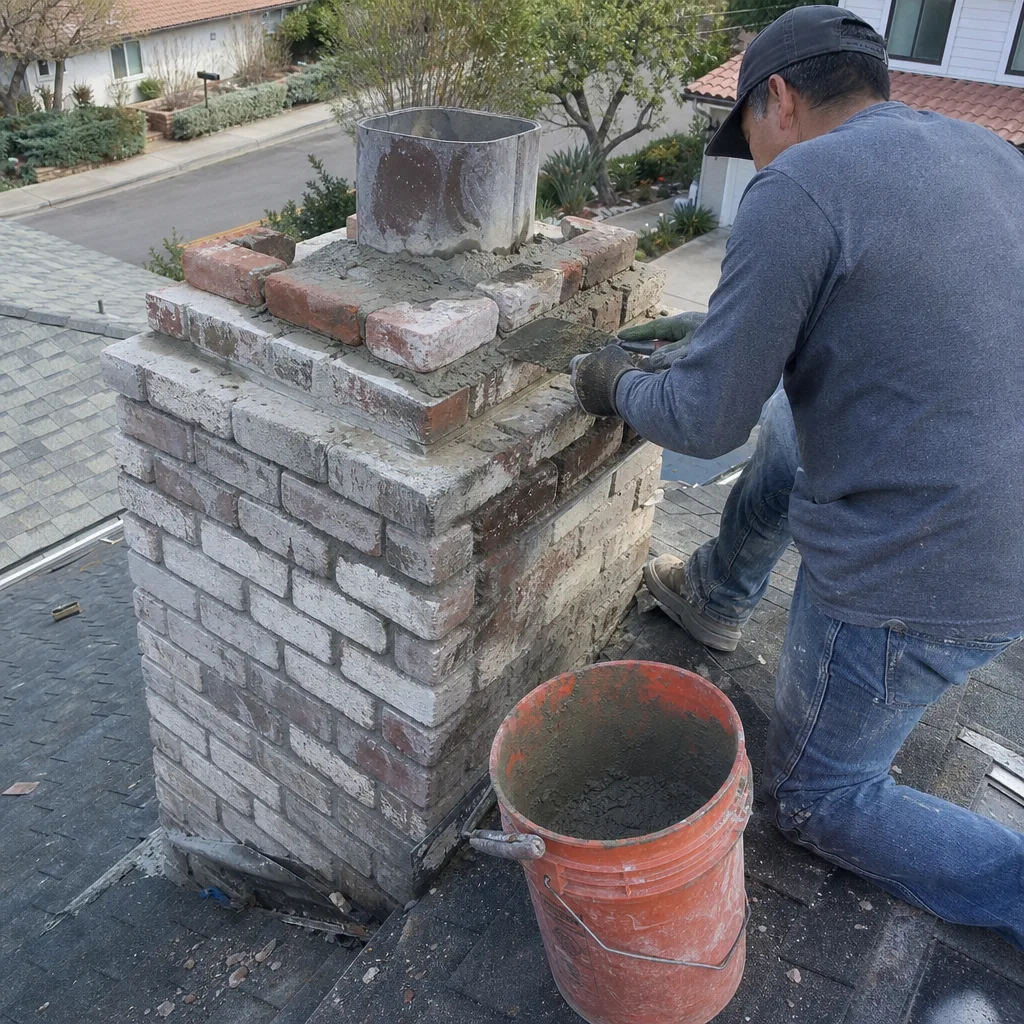
Even if you’re committed to DIY cleaning for the accessible areas, there remains a strong Thousand Oaks-specific case for periodic professional inspection. The local conditions create risks that no brush kit addresses.
Seismic crack detection. Thousand Oaks sits in a high seismic hazard zone with multiple active fault systems nearby. The 1994 Northridge earthquake damaged chimneys throughout Ventura County, and many homes still carry unrepaired or partially repaired structural issues. We find seismic cracks in chimney exteriors and interior flue liners that homeowners never notice because they’re not looking for them. A vertical crack in a flue liner can open under heat stress and allow combustion gases into wall cavities. This is a carbon monoxide pathway, not a draft problem, and it’s invisible from the firebox.
Cap and crown condition in Santa Ana wind exposure. Thousand Oaks experiences significant Santa Ana wind events, especially October through March. These winds drive rain horizontally into chimney tops and test cap attachment and crown integrity. A loose cap becomes a missile hazard. A cracked crown wash allows water into the chimney structure, where freeze-thaw cycles (yes, even in Thousand Oaks, we get below-freezing nights December through February) expand cracks and spall brick faces. The camera inspection reveals crown wash deterioration before water damage requires Chimney Repair in Thousand Oaks work.
Liner integrity in older homes. Many Thousand Oaks homes in the original Rancho Conejo and early developments were built 1960-1985 with unlined chimneys or clay tile liners that have exceeded their design life. Thermal cycling from decades of use degrades clay tiles progressively. The camera inspection is the only way to assess this without destructive investigation.
Wildfire season preparation. Ventura County fire code requires spark arrestors on chimney caps in wildland-urban interface zones, which includes significant portions of Thousand Oaks. A professional inspection verifies cap mesh condition and compliance. We replace damaged spark arrestors with code-compliant mesh from Famco and Copperfield, sourced through our Haven network.
Smoke chamber construction. Many older Thousand Oaks homes have unlined smoke chambers, the sloped area above the damper. The NFPA 211 now requires parging (smoothing with refractory mortar) for unlined smoke chambers, but grandfathered installations are common. The camera inspection accesses this area; a brush kit does not.
Our recommendation: if you DIY clean annually for debris, schedule a professional Level 2 inspection every 2-3 years minimum, or before any real estate transaction, insurance renewal that requires documentation, or after any seismic event. The inspection is separate from cleaning scope. You can clean competently and still need the inspection.
Common Mistakes to Avoid
- Brushing a chimney that hasn’t been inspected. In the Lynn Ranch area, we found a homeowner who had brushed diligently for years, compacting Stage 2 creosote into a glazed layer while missing a completely detached flue tile that shifted during the 1994 quake. The brushing made the hidden problem worse by masking it.
- Using the wrong brush material for the liner type. Steel wire brushes on stainless steel liners cause galling and corrosion initiation. Poly brushes on heavy creosote just polish the surface. Most DIY kits don’t specify liner compatibility because the manufacturers assume you know your liner material, which most homeowners don’t.
- Skipping roof safety or attempting cap work unassisted. Thousand Oaks has significant two-story construction on sloped lots, especially in the hillside neighborhoods. Falls from roof height are the leading cause of DIY home maintenance injury. If you cannot work from a properly anchored harness system, don’t go on the roof.
- Disposing of creosote debris improperly. Ventura County hazardous waste facilities accept creosote, but many homeowners don’t know this and put it in household trash or green waste. This violates county code and creates fire risk in collection vehicles.
- Assuming a clean firebox means a safe system. The firebox is the visible 10%. The flue liner, smoke chamber, and exterior are the safety-critical 90%. A sparkling firebox with a failed crown and cracked liner is a dangerous system that looks fine.
- Not documenting anything. If you do DIY clean, photograph everything: before, during, after, the damper condition, the smoke shelf, any debris removed. Date the photos. Store them with your home records. This is minimal protection, not equivalent to professional documentation, but better than nothing.
When to Call a Professional
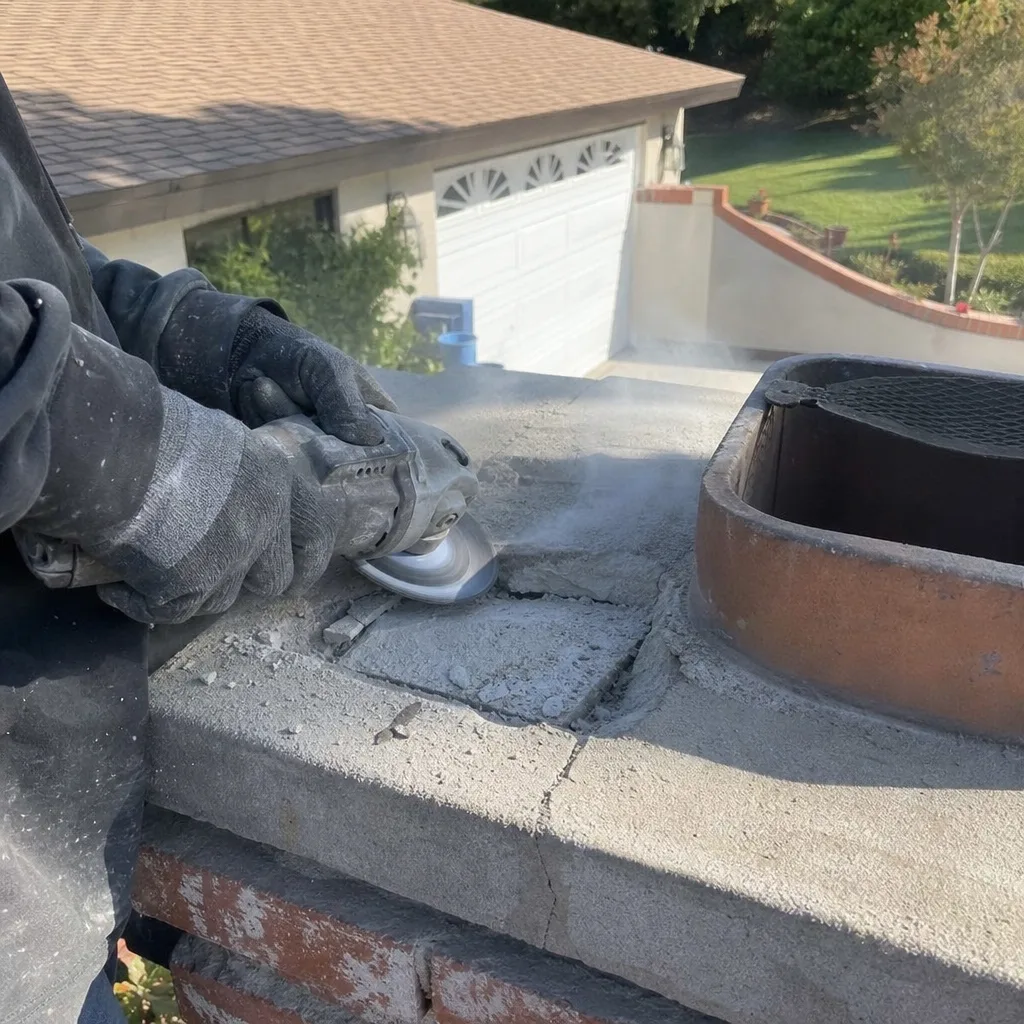
Call a professional sweep when: you cannot determine your creosote stage; you’ve never had a camera inspection; you’re buying or selling the home; your insurance requires documentation; you’ve had a chimney fire or near-fire (smoke backing up, loud cracking sounds, unusual odors); you see exterior cracks, spalling brick, or white efflorescence staining; or it’s been more than two years since any professional inspection.
Level Two Chimney Thousand Oaks offers free estimates in Thousand Oaks. We’ll provide a written price before any work starts, a camera-scan inspection with documented photo record, and our 365-Day Done Right Promise on every job. Call (424) 786-6130 to schedule. Our live phone support runs 24 hours a day, 7 days a week, and you’ll speak to a person, not a voicemail system.
Frequently Asked Questions
A standard sweep with Level 1 visual inspection typically runs $175-$250, while a Level 2 camera-scan sweep with full documentation runs $275-$395. Heavy creosote removal for Stage 2 or 3 buildup ranges $450-$750. Call (424) 786-6130 for a written estimate specific to your chimney - estimates are free.
Most homeowner’s policies do not explicitly prohibit DIY cleaning, but they do require proof of proper maintenance. A dated photo record from a professional sweep carries more weight in claims adjustment than self-reported DIY work. For full protection, maintain professional documentation, especially if you’ve ever filed or may file a fire-related claim.
The NFPA 211 standard calls for annual inspection, with cleaning frequency determined by use and fuel type. A fireplace used 2-3 times weekly during burning season typically needs annual sweeping. Occasional use may extend to every 2-3 years, but the inspection should still happen annually. Thousand Oaks’s mild climate means shorter burning seasons than mountain areas, but Santa Ana wind events and occasional cold snaps still drive regular use.
Skipped maintenance leads to creosote accumulation, which increases chimney fire risk and reduces draft efficiency. Poor draft causes more creosote formation, creating a feedback loop. Water intrusion from uncapped or damaged crowns destroys mortar and liner integrity. In Thousand Oaks’s seismic zone, undetected liner cracks can allow combustion gases into wall cavities. The cumulative result is higher fire risk, potential CO exposure, and repair costs that far exceed maintenance expense.
You need documentation to answer this. A camera inspection showing cracked, shifted, or missing clay tiles, or corrosion in a stainless steel liner, is objective evidence. At Level Two Chimney Thousand Oaks, we show you the camera footage and explain what it means before recommending any work. Our Free Second Opinion on any written estimate means you can bring us a competitor’s quote for comparison. Nothing is recommended without camera evidence you can see for yourself.
Level 1 is a visual inspection of accessible portions without specialized equipment. Level 2 includes a camera scan of the full flue, inspection of attics and crawl spaces where the chimney passes through, and documentation of all accessible components. Level 2 is required for real estate transactions, after chimney fires, or when changing appliance types. Our company name reflects our standard: Level Two Chimney Co. performs Level 2 camera-scan documentation on every visit, not as an upgrade.
The Bottom Line
DIY chimney cleaning has a legitimate but limited scope: accessible firebox and smoke shelf debris, visible damper maintenance, and exterior cap brushing if you can work safely at height. It cannot produce the documented inspection record that protects your insurance position, satisfies real estate disclosure, or detects the hidden conditions that actually create fire and CO risk. The brush is not the issue. The camera, the training, and the written record are. In Thousand Oaks’s seismic environment, with its specific wind exposure and aging housing stock, even competent DIY cleaning leaves critical safety checks undone. Schedule professional inspection on a regular cycle, and maintain the documentation that proves your due diligence. For more guides & resources, visit our blog.
Written by Corrine Halstead, Owner at Level Two Chimney Thousand Oaks, serving Thousand Oaks since 2009.