
Last updated September 21, 2026
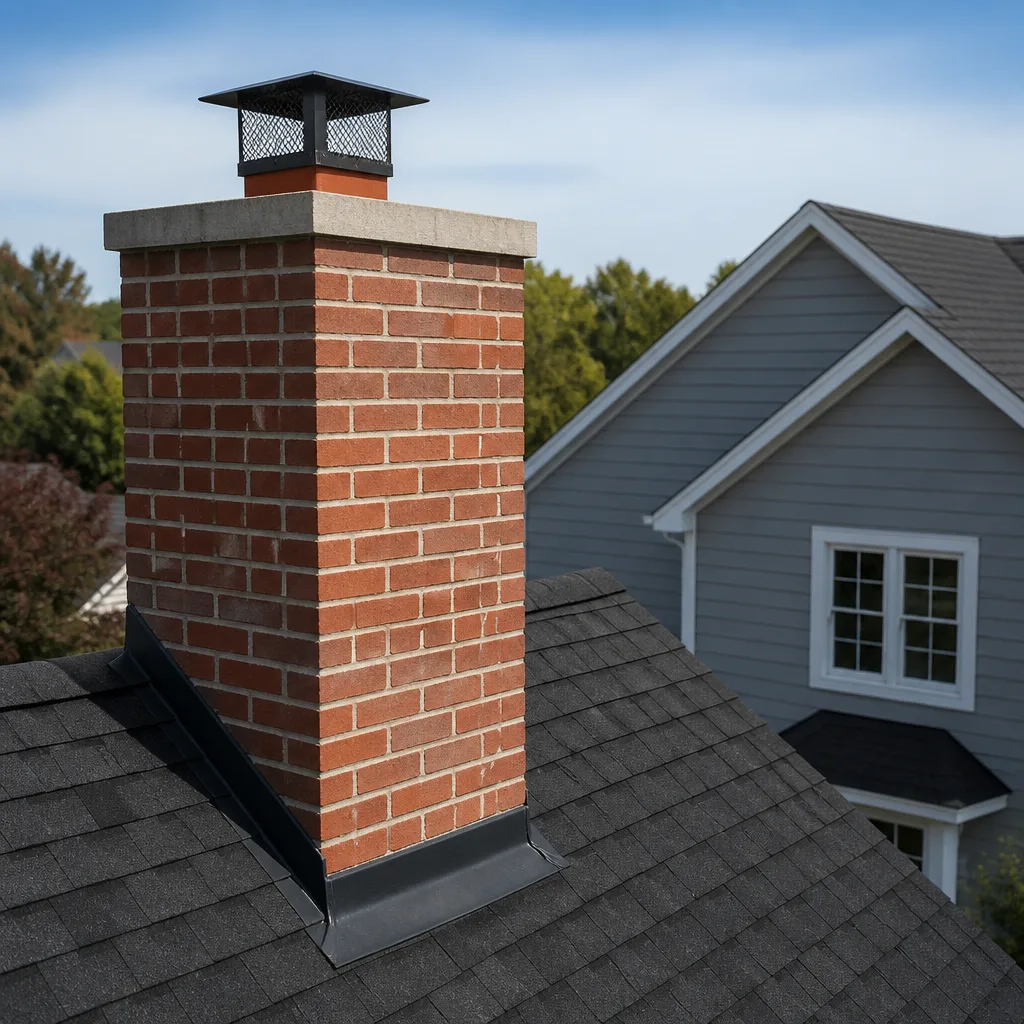
Level 1 sweep and inspection to the NFPA 211 annual standard - flue, crown, cap, and flashing checked and photographed
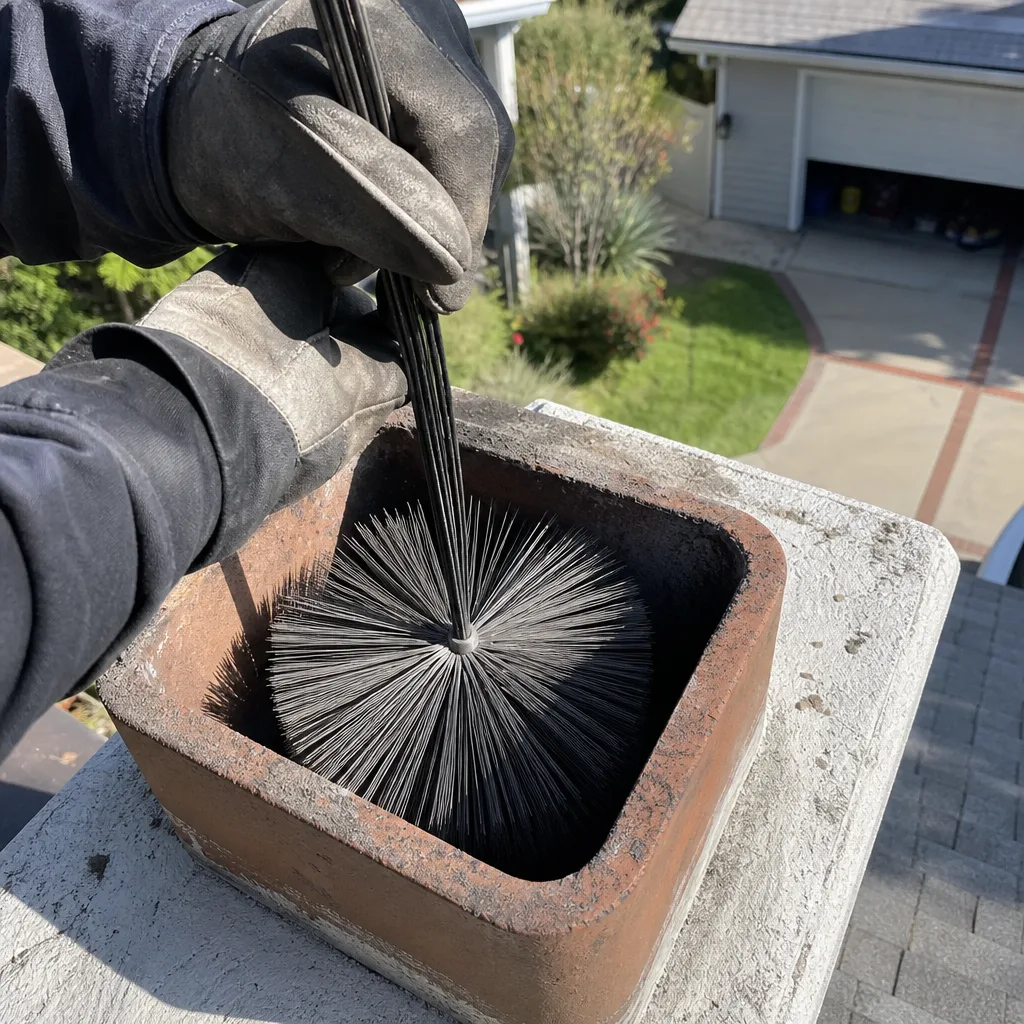
Chimney sweep logs do not sweep chimneys. They loosen some creosote - which then falls where a brush and vacuum still have to collect it.
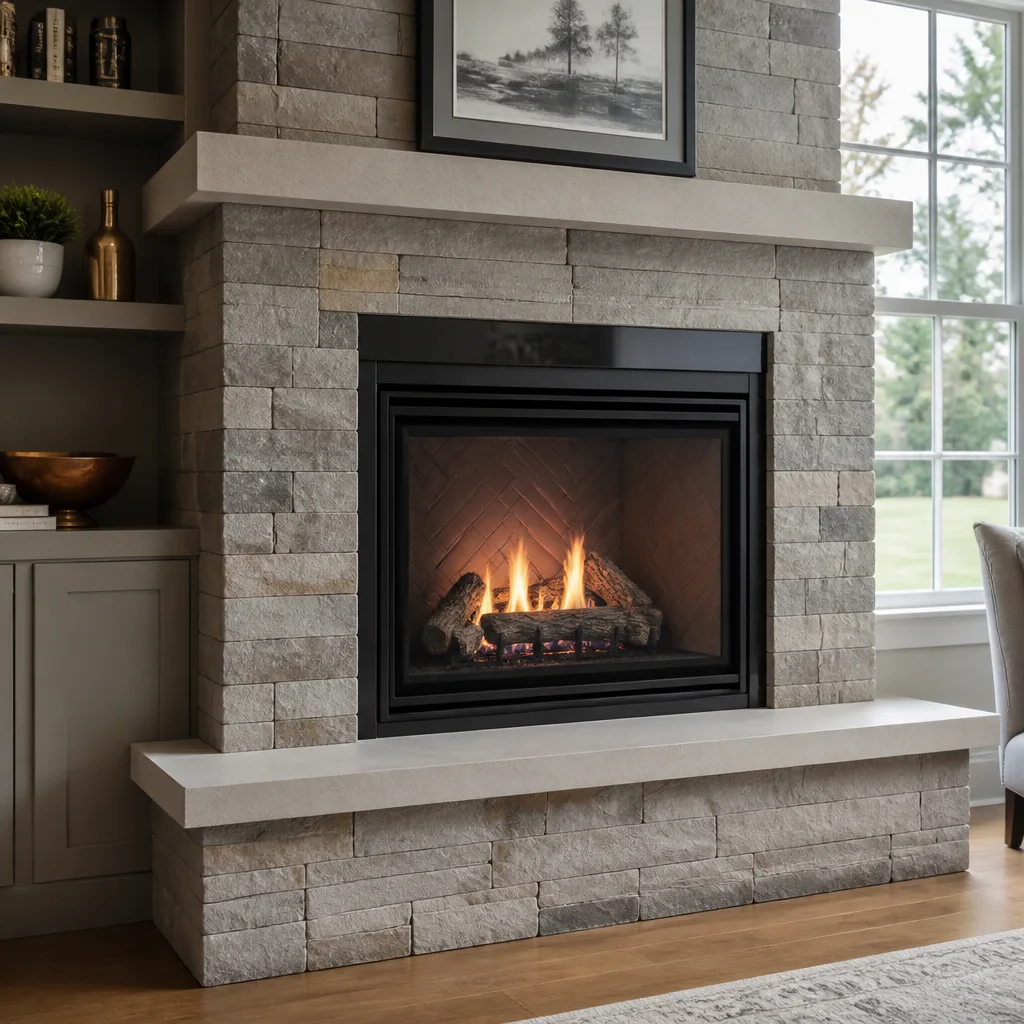
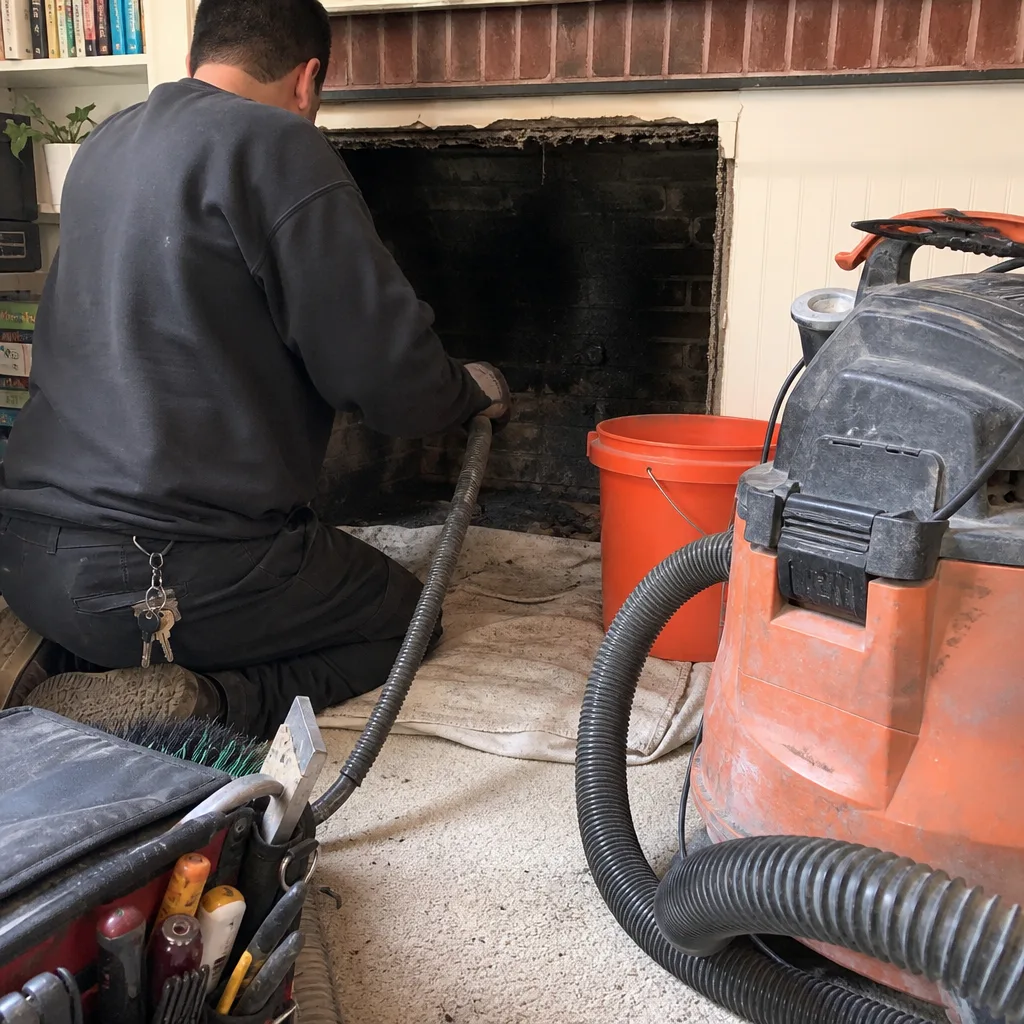 Before
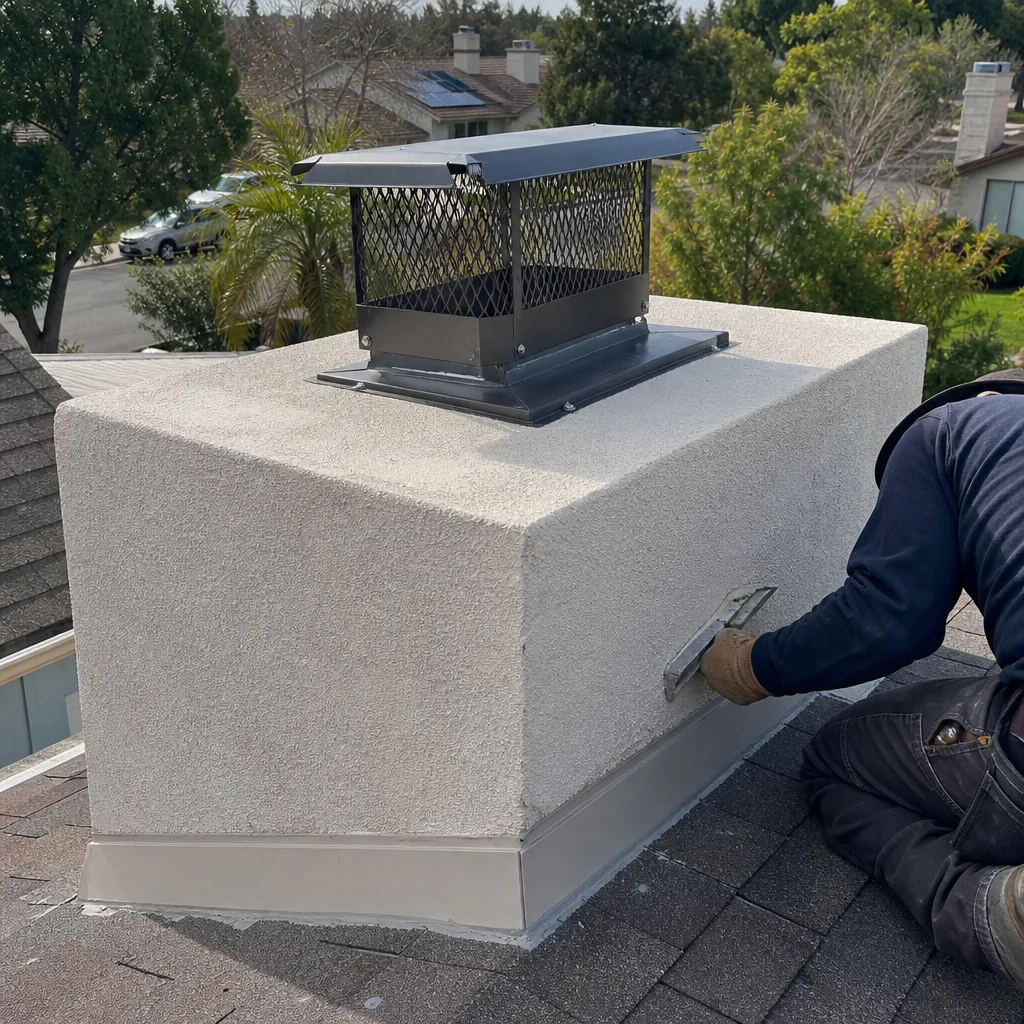 After
After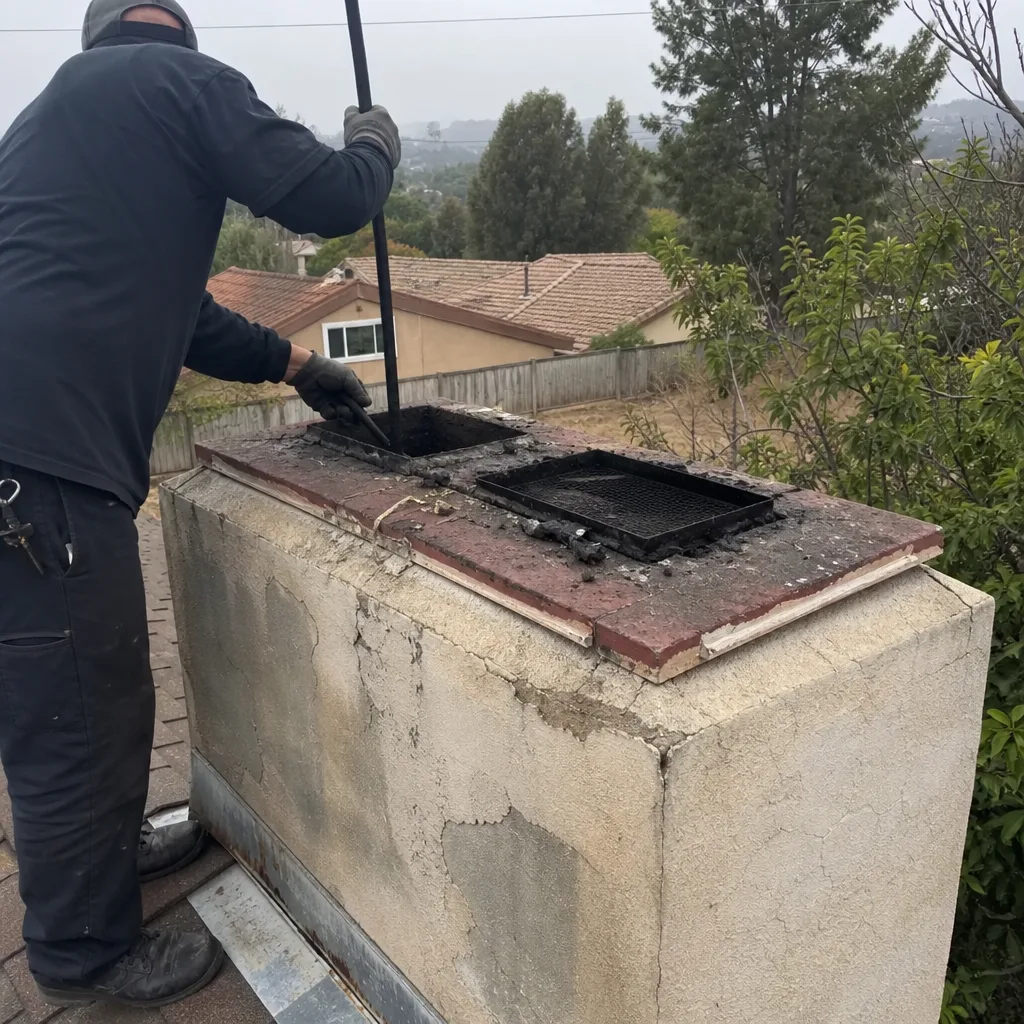 Before
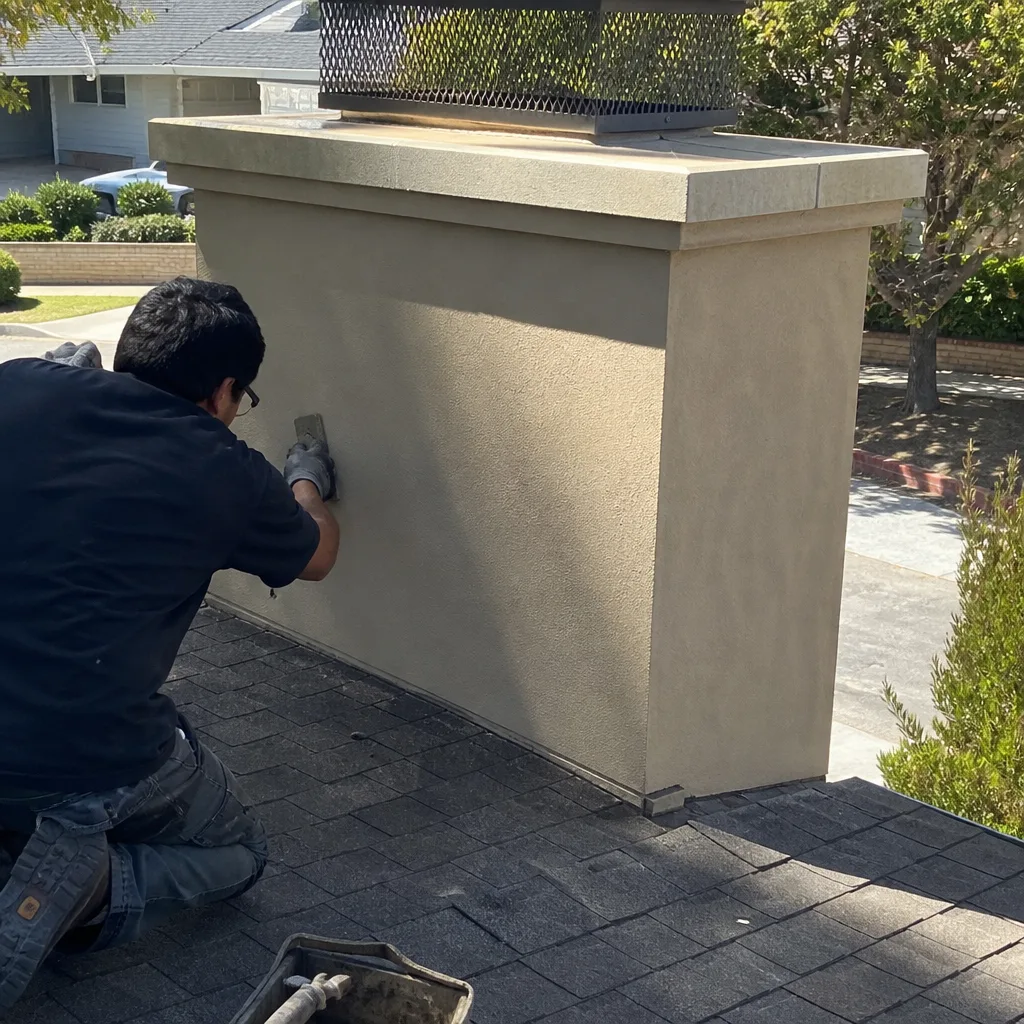 After
After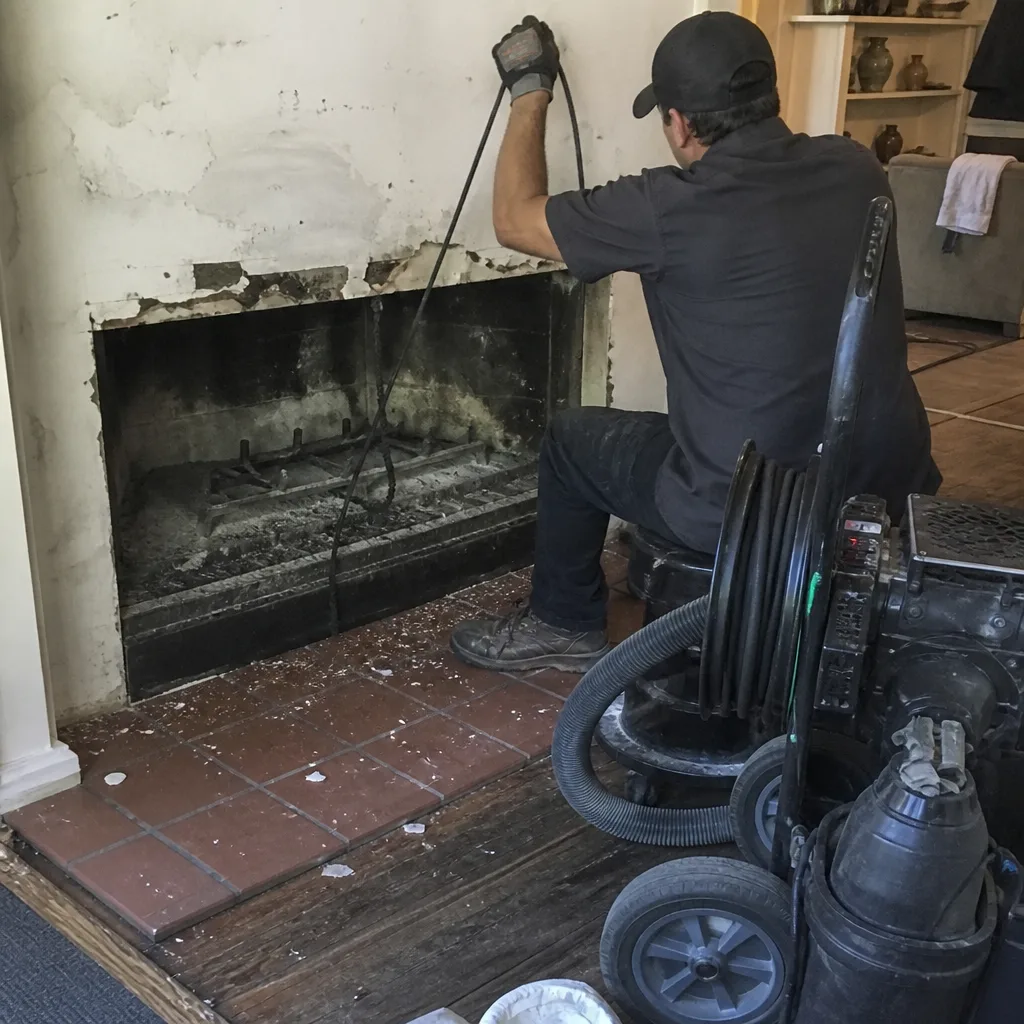 Before
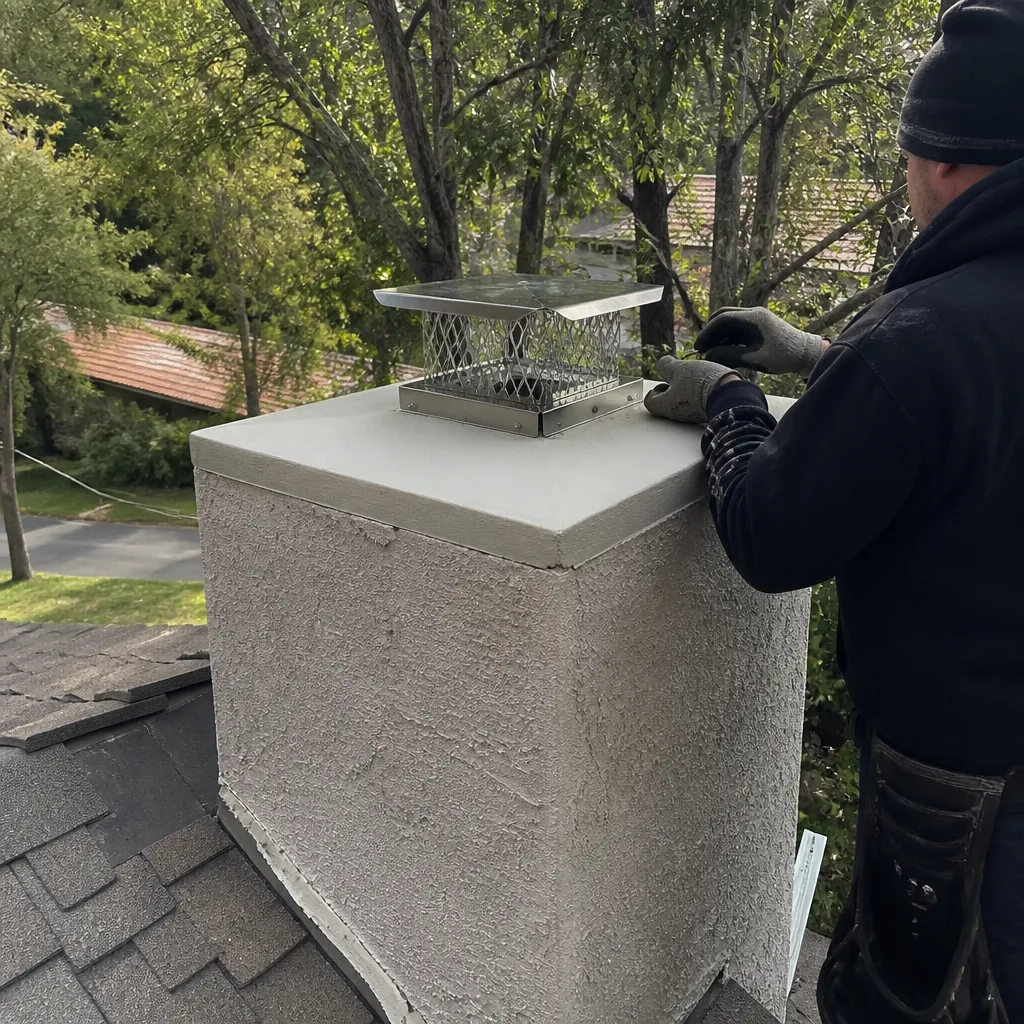 After
AfterChimney Cleaning & Sweep Maintenance Checklist for Thousand Oaks Homeowners
Most chimney checklists circulating online were written by content farms, not by technicians who’ve ever fed a camera probe down a flue. They tell you to “inspect the damper” without explaining what a seized damper costs to fix versus a cracked plate versus one that’s missing entirely. In Thousand Oaks, where many homes built between 1970 and 2005 have factory-built fireplaces never designed for the heavy use some owners put them through, that gap between generic advice and actionable knowledge can cost you $800 to $4,200 in surprise repairs. This guide pairs every checkpoint with a pass/flag/fail standard and a realistic local price range, so you know what you’re looking at before you schedule Chimney Cleaning & Sweep services.
Quick Answer
A complete chimney maintenance checklist for Thousand Oaks homeowners-like our Complete Guide to Chimney Cleaning in Thousand Oaks-covers six critical systems: crown, cap, flue liner, damper, firebox, and smoke chamber. Each component gets evaluated against pass/flag/fail criteria, with flagged items documented by camera inspection before any repair is quoted in writing. Annual Level 2 inspection with photo documentation runs $249-$389 in the Thousand Oaks market, while repairs uncovered range from $180 for a cap replacement to $3,800+ for liner relining with DuraFlex or HeatShield materials.
Table of Contents
- Why Most Chimney Checklists Fail Homeowners
- Component-by-Component Pass/Flag/Fail Checklist
- Thousand Oaks-Specific Risks: Earthquakes, Climate, and Code
- The Seasonal Maintenance Rhythm for Low-Use Southern California Fireplaces
- What You Can Check Yourself vs. What Requires Camera Access
- How to Document Your Maintenance Log for Insurance and Real Estate
- Thousand Oaks Cost Breakdown: Inspection, Sweep, and Common Repairs
- Common Mistakes to Avoid
- When to Call a Professional
- Frequently Asked Questions
- The Bottom Line
 Before
 After
AfterWhy Most Chimney Checklists Fail Homeowners
The standard checklist you’ll find on hardware store websites or municipal fire department pamphlets reads like an inventory: “Check damper operation. Inspect flue. Look for cracks.” It tells you to look without telling you what you’re seeing.
We’ve completed more than 38,000 chimney inspections since 2009, and the pattern is consistent. A homeowner who dutifully “checked the damper” often missed that it closed only 70% of the way, leaking conditioned air year-round and allowing rain intrusion that degraded the smoke chamber above. Another homeowner “inspected the flue” from below with a flashlight and saw nothing wrong, while a camera scan revealed a detached clay liner section shifted by the 1994 Northridge aftershocks, a common finding in Ventura County homes.
The difference between a useful checklist and a useless one is the failure standard. Here’s what we mean:
- Pass: Component functions as designed with no degradation visible to camera or touch.
- Flag: Degradation present but not yet hazardous; repair can be scheduled; condition must be documented.
- Fail: Component poses immediate safety risk or functional compromise; system should not be used until repaired.
Every item below uses these standards. The price ranges reflect what we quote in writing before work starts on Thousand Oaks homes, drawn from our Haven Standard pricing records. We don’t “call for a quote” because Clause 1 of the Haven Standard requires a written price, written scope, and written warranty delivered before anyone starts.
Component-by-Component Pass/Flag/Fail Checklist
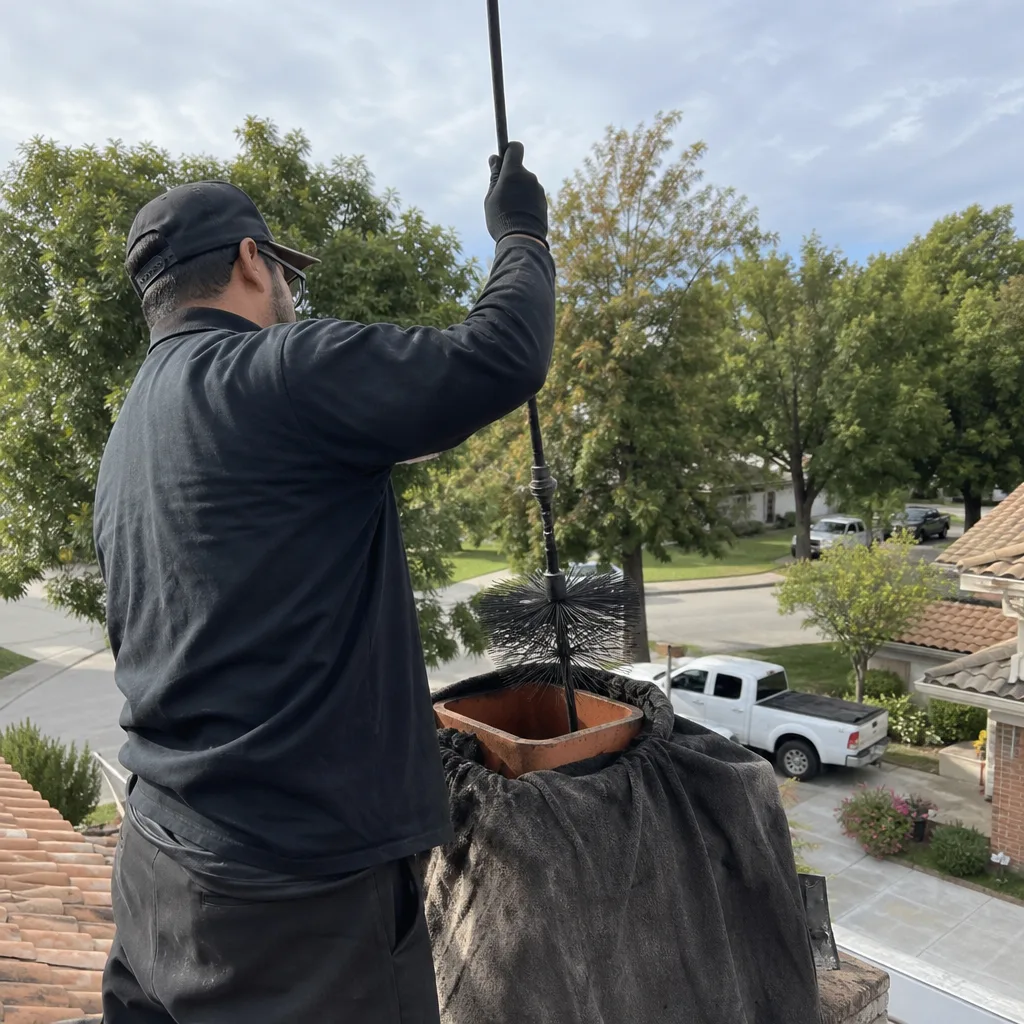
1. Chimney Crown
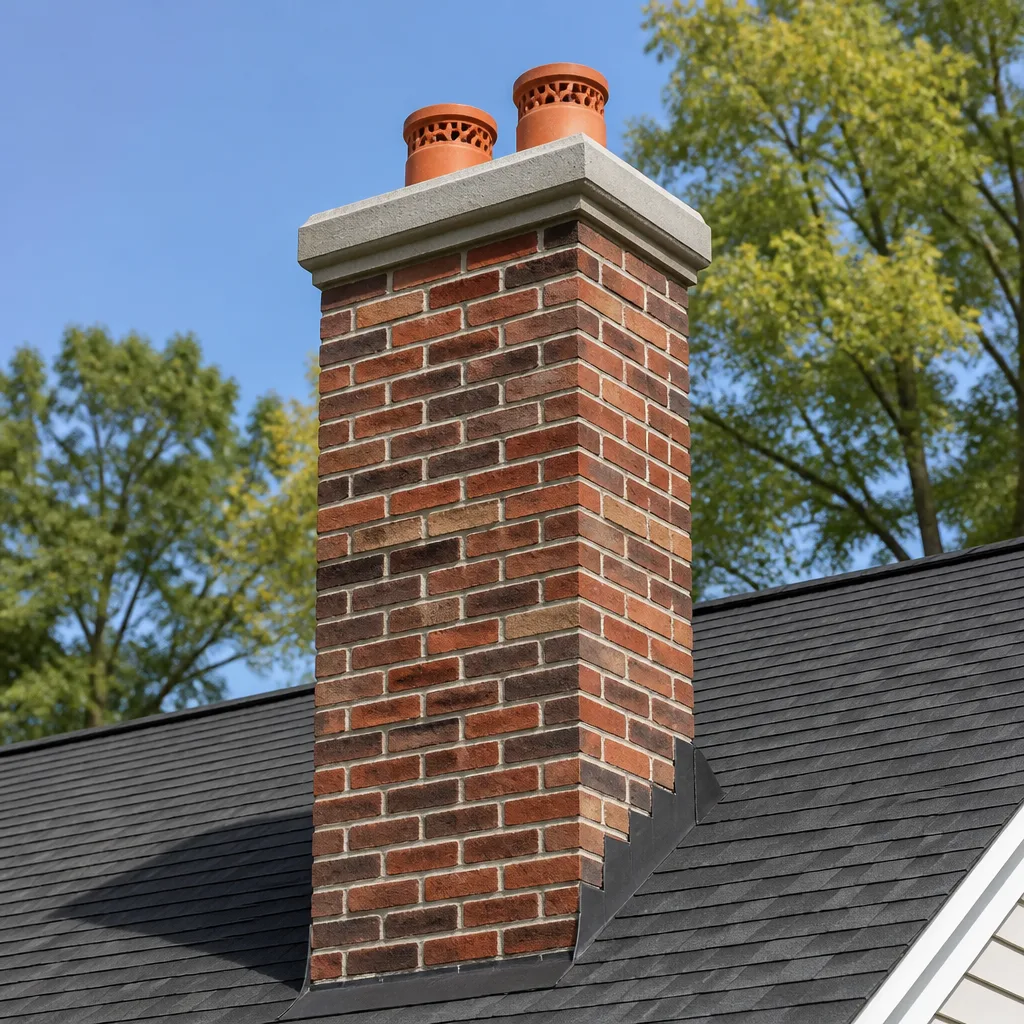
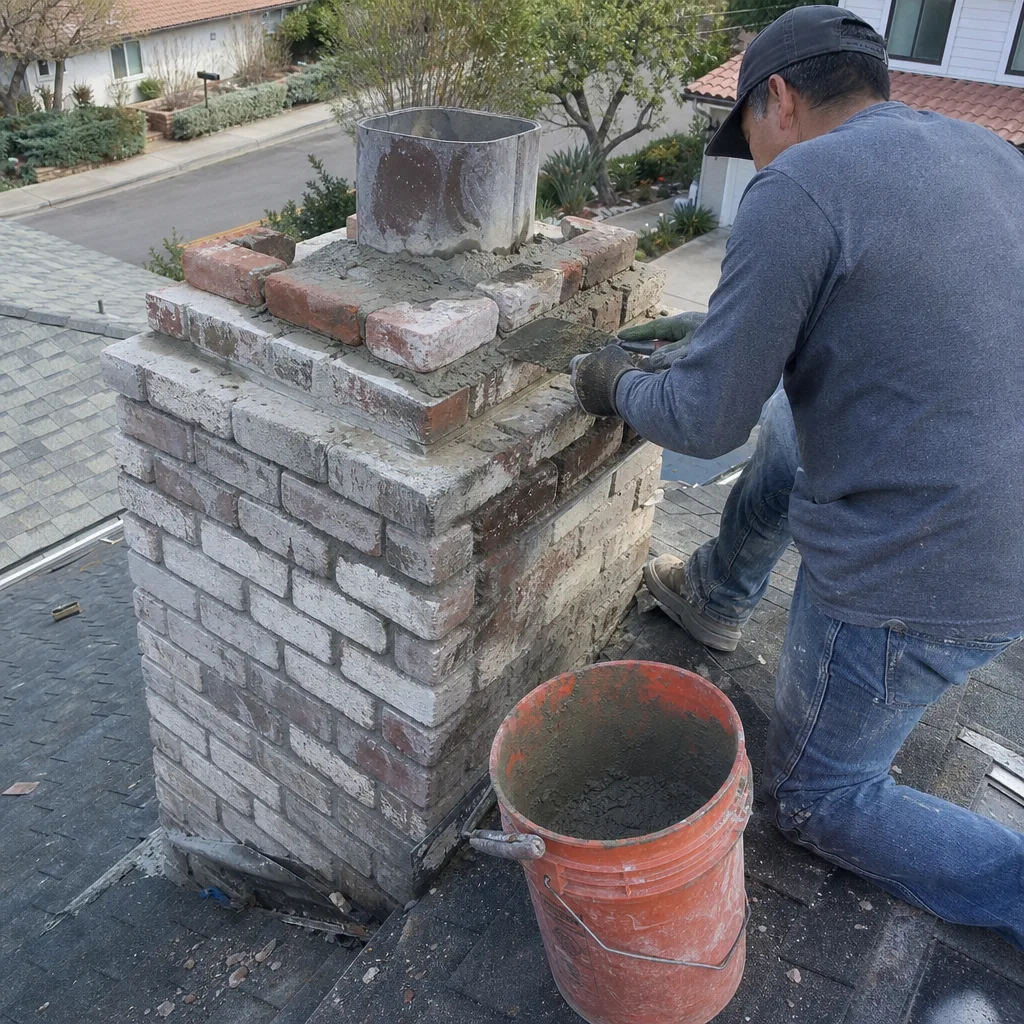
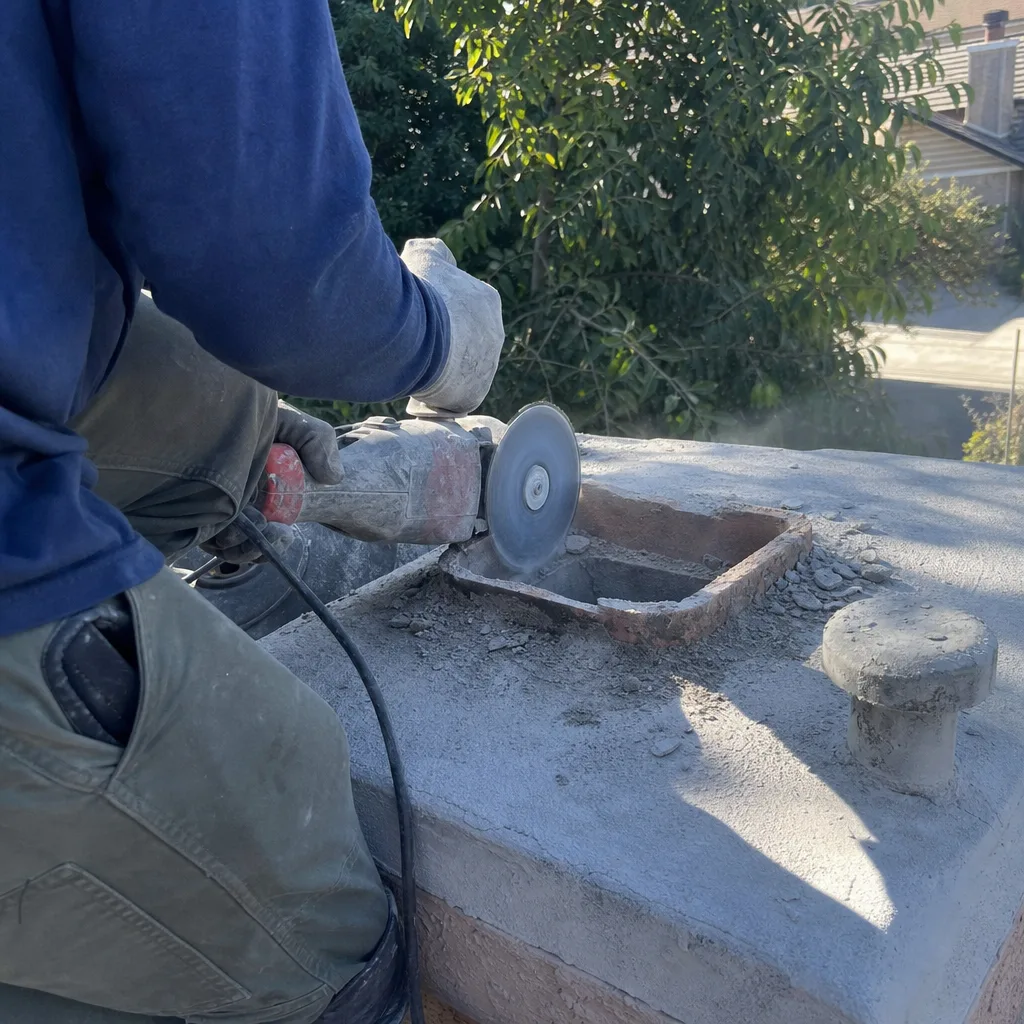
The crown is the concrete or mortar slab at the top of your chimney, sloped to shed water. It is not the cap.
Pass: Crown is intact with no cracks wider than 1/16 inch, proper slope to all edges, and drip edge directing water away from masonry.
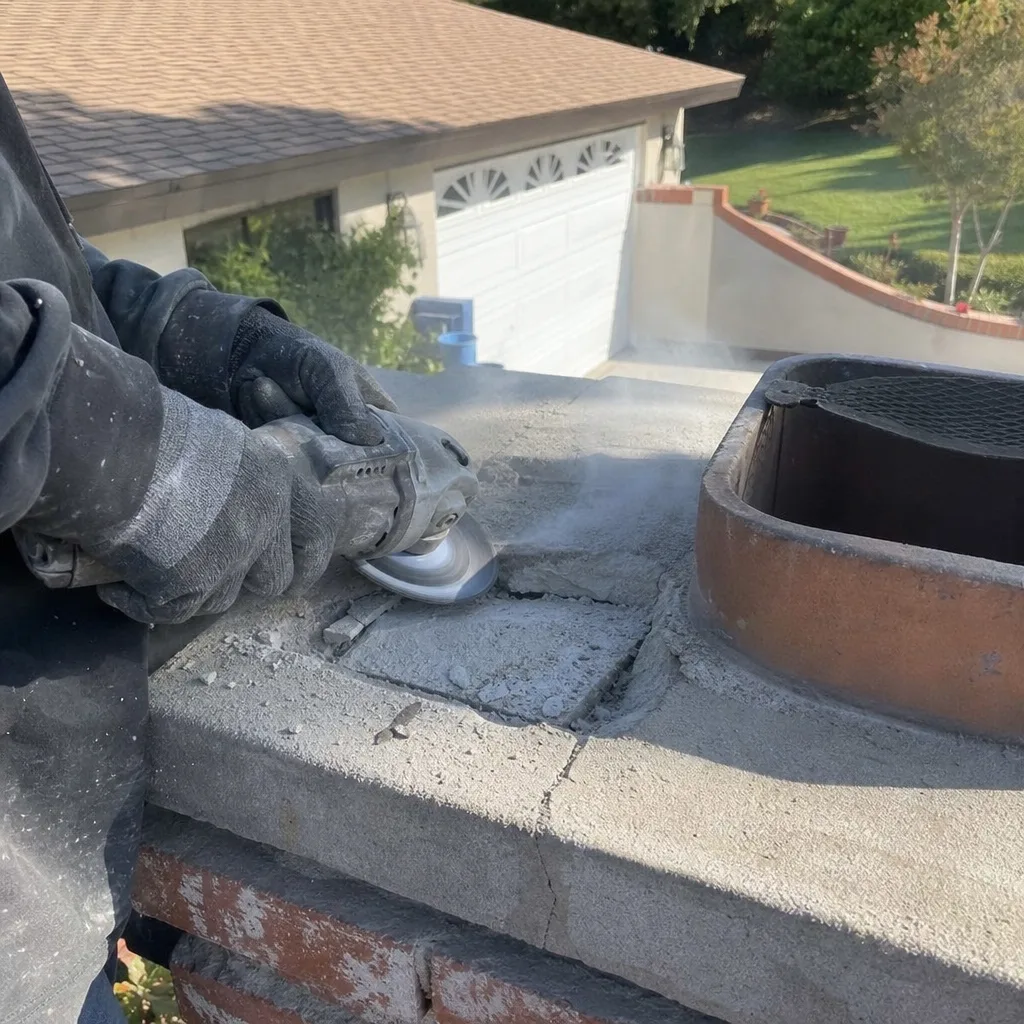
Flag: Hairline cracking, minor spalling (surface flaking), or edge deterioration. In Thousand Oaks, where summer heat cycles exceed 100°F and winter brings occasional freeze-thaw, we’ve seen crown deterioration accelerate in homes north of the 101 near Wildwood Regional Park. Flagged crowns typically run $340-$680 for CrownSeal or HeatShield application with a 10-year warranty.
Fail: Cracks wider than 1/8 inch, pieces missing, or slope reversed toward the flue. Water penetration at this level destroys mortar joints and rusts metal components below. Full crown rebuild in Thousand Oaks: $1,200-$2,400 depending on chimney width and access.
2. Chimney Cap
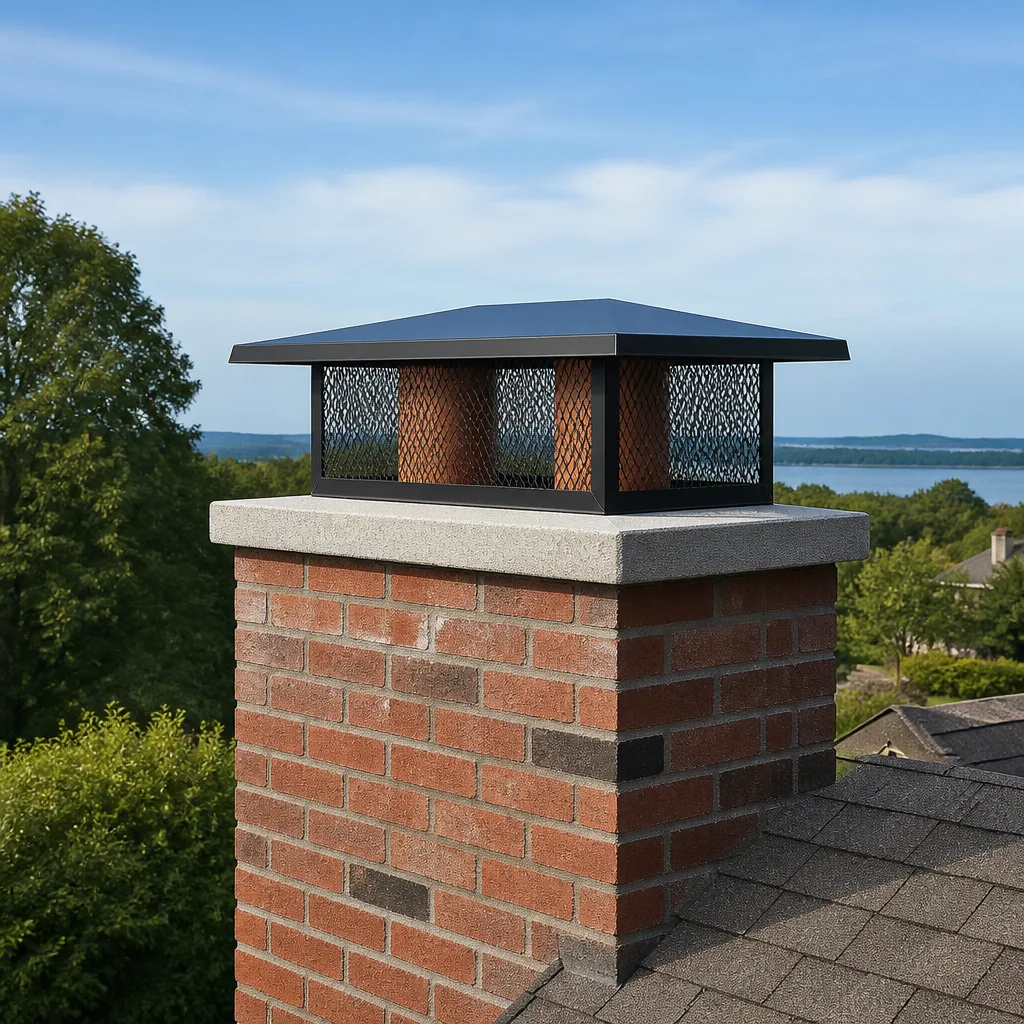
The cap is the metal cover above the flue opening, not the crown beneath it.
Pass: Securely mounted, stainless steel or copper construction, mesh sides intact with 5/8-inch gaps (small enough for spark arresting, large enough to avoid soot clogging), no rust-through.
Flag: Surface rust, loose mounting, or mesh beginning to separate. Caps in coastal-influenced Thousand Oaks corrode faster than inland Ventura County; we’ve replaced Gelco caps in Newbury Park that outlasted cheaper units by 8 years. Flagged cap replacement: $180-$340 installed.
Fail: Missing cap, rusted-through mesh, or cap sized wrong for flue (creating condensation trap). Uncapped flues in Thousand Oaks collect leaf debris from valley oak and coast live oak, a significant fire hazard. Immediate replacement required.
3. Flue Liner
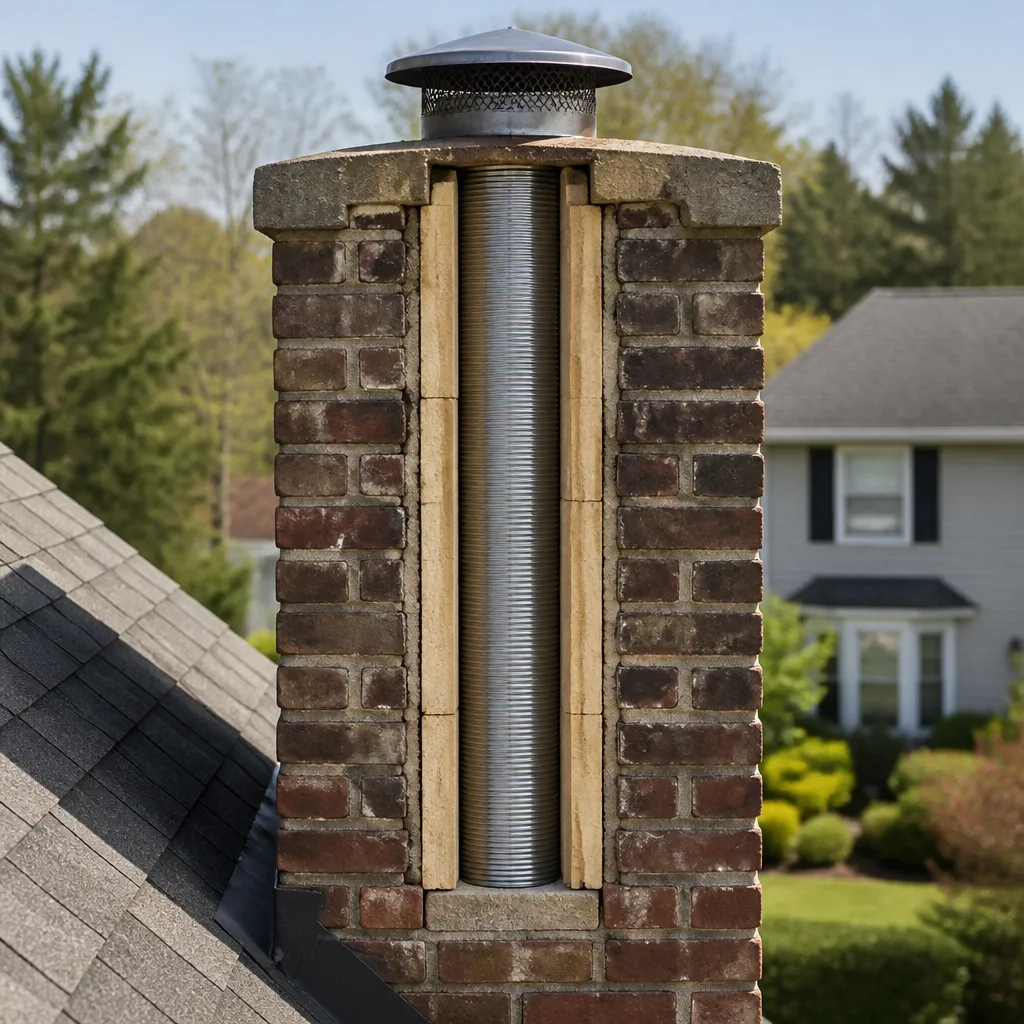
The liner is the clay, metal, or cast-in-place conduit that carries combustion gases from firebox to cap.
Pass: Clay tiles intact with no visible cracks, gaps, or shifted sections; metal liners show no corrosion, separation, or unsupported lengths; joints align properly.
Flag: Minor tile spalling, single hairline crack, or light corrosion spotting on stainless. In our Thousand Oaks records, clay liners in homes built 1965-1985 show flag-level degradation in roughly 40% of inspections. Flagged conditions require annual re-inspection; repair deferred with written documentation.
Fail: Multiple cracked tiles, liner sections visibly shifted or missing, holes in metal liner, or flue gases observed leaking into chimney cavity. This is the condition that produces chimney fires and carbon monoxide intrusion. Relining with DuraFlex stainless or HeatShield cerfractory foam: $2,800-$4,200 for typical Thousand Oaks fireplace flue, quoted in writing with video documentation of the failure.
4. Damper
The damper is the metal plate that seals the flue when the fireplace is not in use.
Pass: Opens fully without binding, closes to seal with no visible gaps, handle or chain operates smoothly, no rust or warping.
Flag: Stiff operation, minor warping with 1/8-inch gap when closed, or surface rust. Common in Thousand Oaks homes where fireplaces see seasonal use only; moisture from rare winter rains combines with disuse to seize cast iron dampers. Flagged damper service or replacement: $280-$520.
Fail: Seized closed (fire hazard if fireplace is used), seized open (massive energy loss), missing entirely, or cracked plate allowing direct flue access. Top-mount damper replacement with stainless cable system: $640-$980.
5. Firebox
The firebox is the chamber where combustion occurs, lined with firebrick or refractory panels.
Pass: Brick or panels intact, mortar joints tight, no staining pattern indicating water intrusion, rear wall thickness adequate (minimum 1 inch for refractory panels).
Flag: Minor mortar deterioration, single cracked panel, or slight heat staining. In Thousand Oaks, fireboxes in homes near active fault zones require specific earthquake crack inspection; we’ve documented thermal expansion cracks misidentified as structural in Conejo Valley properties. Flagged firebox repair with HeatShield or panel replacement: $480-$1,200.
Fail: Missing bricks, panels cracked through, mortar missing to depth exceeding 1/2 inch, or visible gaps to framing. Structural firebox rebuild: $2,400-$5,600 depending on access and whether factory-built or masonry construction.
6. Smoke Chamber
The smoke chamber is the area above the damper, sloping to connect firebox to flue. It is the most common location for concealed hazards.
Pass: Smooth parged surface with no exposed corbelling (stepped brick), proper slope, no creosote accumulation beyond light soot.
Flag: Rough corbelling exposed, minor parging loss, or moderate creosote (Class I or II). The smoke chamber cannot be evaluated adequately without camera access; flashlight inspection from below misses 70% of degradation by our measurement. Flagged smoke chamber parging with Chamber-Tech 2000 or HeatShield: $1,400-$2,200.
Fail: Significant parging loss exposing corbelling, Class III creosote (tar-like, hardened), or structural cracks. This is the condition most associated with chimney fires; system must not be used until repaired.
Thousand Oaks-Specific Risks: Earthquakes, Climate, and Code
Ventura County sits at the intersection of the Oak Ridge Fault, the Simi-Santa Rosa Fault zone, and the broader Transverse Ranges seismic system. For chimney maintenance, this geography creates specific inspection priorities that generic checklists ignore.
Earthquake crack inspection for firebox masonry. Thermal expansion cracks in firebrick run vertically and follow heat patterns. Seismic cracks run diagonally, often stepping through mortar joints, and may extend into the smoke chamber or exterior masonry. In our Thousand Oaks inspections, particularly in neighborhoods north of Borchard Road and in the Lang Ranch area, we’ve identified seismic crack patterns that homeowners had monitored for years as “settling.” The distinction matters: thermal cracks typically don’t compromise structure; seismic cracks can indicate liner displacement or chimney separation from the building. Our Level 2 camera inspection, standard on every visit, documents which crack type is present.
Coastal-influenced corrosion. Thousand Oaks receives marine layer influence 8-10 miles inland, particularly in early morning hours. Stainless steel caps and DuraFlex liners resist this; galvanized or aluminum components show accelerated degradation. We specify 316Ti stainless for coastal-influenced Ventura County installations, not 304, and document the alloy grade in our photo records.
Ventura County code and permit requirements. Chimney repairs exceeding $1,000 in materials and labor require permit through the Ventura County Building and Safety Division for unincorporated areas, or through the City of Thousand Oaks Building Division for incorporated properties. Liner replacement, structural rebuild, and new chimney construction all trigger permit requirements. Our quotes specify when permit costs are included; we pull permits directly and schedule inspections, documented in your photo record.
Wildland-urban interface considerations. Thousand Oaks properties in Very High Fire Hazard Severity Zones, including portions of North Ranch and Westlake Village-adjacent areas, face additional requirements for spark arrestors and clearances. We verify cap mesh sizing and document compliance for insurance purposes under Haven Standard Clause 4.
The Seasonal Maintenance Rhythm for Low-Use Southern California Fireplaces
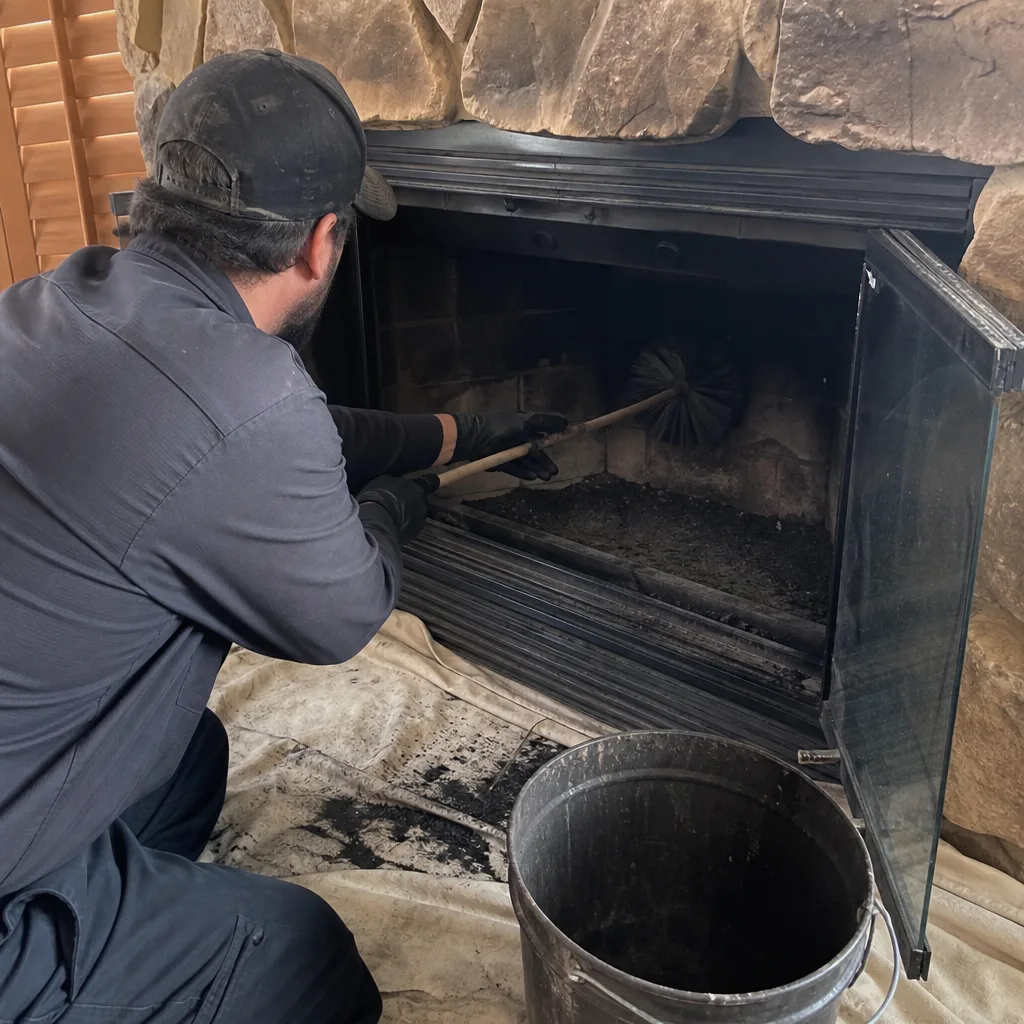
Thousand Oaks homeowners use fireplaces differently than national averages assume. Most of our local customers burn 12-20 fires per season, not daily through winter. This usage pattern creates a distinct maintenance rhythm we explore further in more guides & resources.
Annual inspection cadence for low-use systems. NFPA 211 recommends annual inspection regardless of use frequency. For low-use Southern California fireplaces, we modify this slightly: a Level 2 inspection with camera scan every 12 months, with sweep only if creosote exceeds 1/8-inch accumulation. In our Thousand Oaks data, roughly 35% of annual inspections find insufficient creosote to require sweeping; we document this and charge inspection only, not sweep.
Pre-season timing. The optimal inspection window in Thousand Oaks is September through early November, before first use and before our schedule compresses. October appointments fill first; we recommend booking by Labor Day. Post-season inspection (March-April) is acceptable for homeowners who forgot pre-season, with the caveat that any deferred maintenance then delays use until repairs complete.
Wood-burning-primary systems. If you burn more than 40 fires per season, or use the fireplace as primary heat source, increase to inspection plus sweep annually, with mid-season visual check of cap and crown. This usage pattern is rare in Thousand Oaks but present in some rural Ventura County properties on septic and propane.
Gas log conversions. Many Thousand Oaks homeowners converted wood fireplaces to gas logs between 2010 and 2020. These systems still require annual inspection of the valve, burner, and venting, but creosote concerns drop dramatically. We inspect gas systems for proper orifice sizing and draft performance; improper conversion is a common finding in our records.
- Schedule Level 2 inspection: September-November for pre-season, March-April for post-season catch-up.
- Receive written quote before any work: Haven Standard Clause 1 requires written price, scope, and warranty.
- Camera scan and photo documentation: Clause 4 requires documented record on every visit.
- Review findings with technician: named, background-checked, uniformed; license number provided.
- Approve work or defer with documentation: flagged items tracked for next inspection.
- Receive completed photo record and warranty documentation: 365-Day Done Right Promise applies.
What You Can Check Yourself vs. What Requires Camera Access
There’s a honest boundary between homeowner vigilance and professional evaluation. We encourage the first and insist on the second where safety is at stake.
Homeowner-accessible checks (no tools required):
- Cap presence and obvious damage: visible from ground with binoculars, or roof edge if safely accessible.
- Crown condition from below: major cracks or missing sections visible if you can see the chimney top.
- Damper operation: open and close; note binding, noise, or incomplete closure.
- Firebox visual: obvious missing bricks, major cracks, or staining pattern changes from previous year.
- Smoke draw: light a match, blow it out, observe if smoke rises promptly into flue (not into room).
- Exterior masonry: spalling, leaning, or vegetation growth indicating moisture retention.
Requires professional camera and access:
- Flue liner full-length condition: no homeowner flashlight reaches 15+ feet up a flue with sufficient resolution.
- Smoke chamber evaluation: entirely concealed above damper; corbelling and parging loss undetectable otherwise.
- Creosote classification: Class I (soot), II (flakes), and III (tar) require close inspection to distinguish; Class III requires chemical treatment, not mechanical sweep.
- Clearance to combustibles: hidden construction in walls and framing requires specialized knowledge of code and access methods.
- Structural integrity of chimney stack: leaning, separation, or foundation issues require measurement and engineering evaluation.
We’ve seen Thousand Oaks homeowners attempt DIY flue inspection with smartphone cameras on extendable poles. The images are invariably unusable, and the risk of dropping equipment into the flue or damaging liner tiles exceeds any value. Our camera systems are specifically designed for chimney inspection, with self-leveling heads and LED lighting that reveals what consumer equipment cannot.
How to Document Your Maintenance Log for Insurance and Real Estate
Your chimney maintenance record is a legal document the moment you file an insurance claim or list your home. Disorganized or missing records cost Thousand Oaks homeowners real money.
What the log must contain:
- Date of service, company name, technician name, and license number.
- Scope of work performed: inspection level, sweep, repairs with materials specified.
- Condition assessment for each component: pass/flag/fail with specific observations.
- Photo or video documentation: dated, geotagged if possible.
- Written quote and final invoice: scope match verification.
- Warranty documentation: terms, duration, transferability.
Insurance claim protection. After a chimney fire or water damage claim, insurers routinely request maintenance records. Gaps in annual inspection documentation, or records from uncertified providers without photo evidence, have supported claim denials in California cases we’ve reviewed. Our Haven Standard documentation package, provided on every visit, is designed for this scrutiny: dated photos, written scope, technician identification, and warranty terms in one PDF.
Real estate disclosure requirements. California Civil Code Section 1102 requires disclosure of material defects in fireplace and chimney systems. A documented maintenance history with professional inspection records satisfies due diligence requirements; absence of records creates liability. For Thousand Oaks sellers in neighborhoods like Lynn Ranch or Tarantula Hill where buyers conduct thorough due diligence, complete records accelerate transactions and reduce negotiation friction.
Digital vs. physical storage. We provide cloud-stored photo records accessible via link, with download option. We recommend homeowners maintain both digital backup and printed summary in home files. Our records archive extends back to 2009 for repeat customers; we can reproduce documentation on request.
Thousand Oaks Cost Breakdown: Inspection, Sweep, and Common Repairs
All prices reflect our written quotes before work starts, drawn from Haven Standard pricing records for the Thousand Oaks market. We do not charge for estimates.
| Service or Repair | Price Range | Notes |
|---|---|---|
| Level 2 Inspection with Camera Scan | $249-$389 | Includes photo record, written condition report, no-obligation quote for any flagged items |
| Chimney Sweep (if needed) | $180-$280 | Added to inspection when creosote exceeds 1/8 inch; not charged if sweep unnecessary |
| Chimney Cap Replacement | $180-$340 | Stainless or copper; Gelco or similar; installed |
| Crown Repair (Sealant/Coating) | $340-$680 | HeatShield or CrownSeal; 10-year warranty |
| Crown Rebuild | $1,200-$2,400 | Full removal and pour; varies with chimney width |
| Damper Service/Replacement | $280-$520 | Throat or top-mount; stainless construction |
| Firebox Repair (Panels/Parging) | $480-$1,200 | HeatShield application or refractory panel replacement |
| Smoke Chamber Parging | $1,400-$2,200 | Chamber-Tech 2000 or HeatShield; smooth finish to NFPA standard |
| Flue Liner Relining | $2,800-$4,200 | DuraFlex stainless or HeatShield cerfractory; includes permit where required |
| Firebox Structural Rebuild | $2,400-$5,600 | Masonry or factory-built; access-dependent |
These ranges are current for Thousand Oaks and surrounding Ventura County service areas. We source materials through Haven’s buying network from Copperfield, DuraFlex, HeatShield, Gelco, Olympia Chimney, and Famco specifically to maintain price honesty. Our Free Second Opinion on any competitor’s written estimate confirms whether quoted scope and materials match actual need.
Common Mistakes to Avoid
- Assuming gas fireplaces need no inspection. Gas valve degradation, burner misalignment, and venting failure all create carbon monoxide risk. Annual inspection applies to gas systems too.
- Using the “white brick” test as sole evaluation. Some homeowners check firebox brick color to judge heat exposure. Color change is normal; crack pattern and depth matter. This test misses liner and smoke chamber conditions entirely.
- Deferring maintenance because “we barely use it.” In Thousand Oaks, disuse combined with occasional winter rain causes damper seizure and crown deterioration faster than moderate use with proper drafting. Low-use systems need inspection, not less.
- Accepting verbal quotes or phone estimates. Without written scope and written warranty, you have no documentation for insurance, real estate disclosure, or dispute resolution. Haven Standard Clause 1 exists because we’ve seen the alternative fail homeowners.
- Hiring based on lowest price without photo documentation requirement. A $99 “sweep special” without camera inspection cannot evaluate liner or smoke chamber condition. We’ve been called to correct work from these providers, with total cost exceeding our original quote.
- Ignoring earthquake-specific crack patterns. Thermal and seismic cracks require different responses. Misidentification leads to inappropriate repair or dangerous deferral.
- Failing to verify permit completion. Unpermitted liner replacement or structural rebuild creates title and insurance issues. We pull permits and schedule inspections as part of quoted scope.
When to Call a Professional
Call for immediate evaluation if you observe smoke entering the room during use, visible flame or sparking from chimney top, sudden draft reversal, or debris falling into the firebox. These indicate active hazard, not deferred maintenance.
Schedule standard inspection if it’s been more than 12 months since last professional evaluation, you’re purchasing a home and seller disclosure lacks chimney documentation, or you’re converting fuel type (wood to gas or reverse).
Level Two Chimney Thousand Oaks offers free estimates throughout Thousand Oaks and Ventura County. Every estimate includes written scope, written price, and written warranty before any work begins. Call (424) 786-6130 to schedule. Live phone support is available 24 hours a day, 7 days a week; you’ll speak with a person, not voicemail.
Frequently Asked Questions
A professional chimney sweep in Thousand Oaks typically costs $180-$280 when combined with Level 2 inspection, or $249-$389 for inspection with camera scan alone if creosote levels don’t require sweeping. We don’t charge for sweep if inspection shows insufficient accumulation. Call (424) 786-6130 for a free estimate with written quote before any work starts.
You need liner replacement only if inspection documents cracks, gaps, separation, or deterioration that allows flue gases to enter chimney cavity. We don’t recommend liner work without camera evidence you can review yourself. In our Thousand Oaks records, roughly 15% of inspections result in liner replacement recommendation; the majority are repairable or remain in serviceable condition with monitoring. Free second opinion available on any competitor’s written estimate.
NFPA 211 recommends annual inspection for all chimney systems; sweep frequency depends on use and fuel. Most Thousand Oaks homeowners burning 12-20 fires per season need sweep every 1-2 years, with annual inspection to determine when accumulation requires it. Heavy use (40+ fires annually) requires annual sweep. Our inspection includes creosote measurement and classification; we sweep only when justified by documented accumulation.
Skipped maintenance leads to three predictable outcomes: creosote accumulation increasing chimney fire risk; moisture intrusion degrading crowns, mortar, and metal components; and undetected liner or smoke chamber damage allowing carbon monoxide intrusion or structural fire spread. In Ventura County, chimney fires peak in January when systems are first used after long disuse. Annual inspection catches deterioration before it becomes hazardous. Call (424) 786-6130 to schedule.
You can perform basic visual checks of cap, crown, damper, and firebox as described in this guide. Flue liner, smoke chamber, and clearance evaluation require professional camera equipment and training. We’ve documented significant hazards in Thousand Oaks chimneys that appeared normal from below. The $249-$389 inspection cost is minimal compared to undetected failure consequences.
A Level 2 inspection per NFPA 211 includes examination of accessible portions of chimney exterior and interior, including attic, basement, and crawl space; camera scan of flue interior; evaluation of clearances to combustibles; and assessment of all components for proper installation and condition. Our Level 2 inspections include documented photo record as required by Haven Standard Clause 4, written condition report, and written quote for any recommended work. This has been our standard practice since 2009.
The Bottom Line
A chimney maintenance checklist is only as good as the failure standards it applies. This guide gives Thousand Oaks homeowners specific pass/flag/fail criteria for six critical components, realistic local price ranges for repairs, and documentation practices that protect insurance claims and real estate transactions. The seasonal rhythm for low-use Southern California fireplaces differs from national assumptions; earthquake-specific risks in Ventura County require targeted inspection; and the boundary between homeowner vigilance and professional evaluation is clear. Schedule your Chimney Cleaning & Sweep in Thousand Oaks with Level 2 inspection, or explore Chimney Repair in Thousand Oaks and Fireplace Services in Thousand Oaks for comprehensive care. Every visit includes written price before work, camera documentation, and the 365-Day Done Right Promise.
Written by Corrine Halstead, Owner at Level Two Chimney Thousand Oaks, serving Thousand Oaks since 2009.